
Table of Contents
Introduction
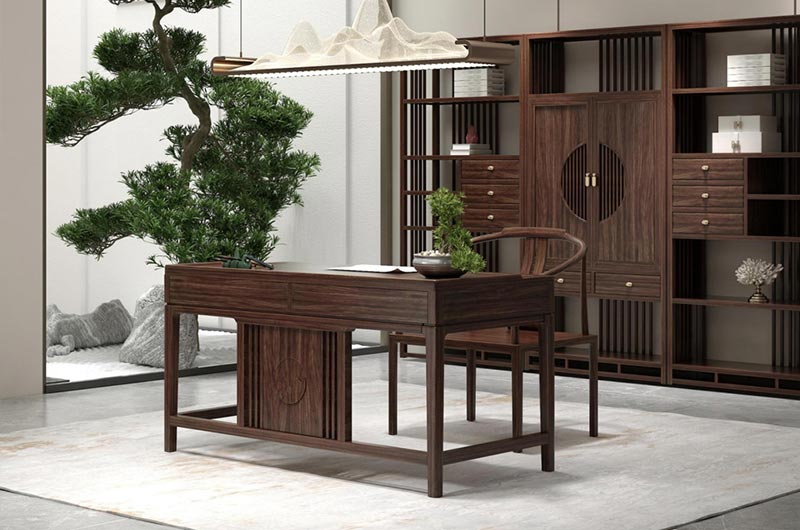
High quality home furniture is easy to recognize in a beautifully styled photograph but much harder to evaluate in the real world.
A sofa may have an attractive silhouette. A dining table may feature an impressive wood grain. A cabinet may appear perfectly finished under showroom lighting. Yet none of these details alone can tell you whether the furniture has been designed and constructed for reliable everyday use.
Real furniture quality is layered.
It begins with appropriate materials, but it also depends on structural design, joinery, surface preparation, ergonomics, hardware, dimensional accuracy and how well the furniture fits the room where it will actually be used.
This distinction matters because furniture is not simply decoration. It is part of the functional architecture of a home. You sit on it, open it, move around it, store belongings inside it and interact with it every day.
When evaluating high quality home furniture, consider these key points:
- Material quality should be appropriate to the furniture’s function.
- Structural strength is more important than visual thickness.
- Good craftsmanship is visible in joints, edges and alignment.
- Furniture dimensions should relate to both the user and the room.
- Upholstery quality involves more than the outer fabric.
- Hardware affects daily usability and long-term performance.
- Customization is valuable when it solves real spatial or functional problems.
- A coordinated room does not require every piece to match.
- High quality furniture should look good from close range as well as from across the room.
This guide introduces a practical framework for evaluating furniture before making a selection.
What Does High Quality Home Furniture Actually Mean?
High quality home furniture is furniture in which material selection, construction, craftsmanship, function and design have been developed as one system.
It should not rely on appearance alone.
The furniture needs to perform its intended function comfortably, maintain structural stability and fit naturally into the surrounding interior.
Quality Goes Beyond Appearance
One of the easiest mistakes to make is equating a refined appearance with high quality.
Surface finishing can make different construction methods look similar from a distance. Upholstery can conceal the internal frame of a sofa, while cabinet doors can hide the materials used inside a storage unit.
That means quality assessment should move from the outside inward.
Ask:
- What is the furniture made from?
- How are the components connected?
- How is load transferred through the structure?
- Are the dimensions appropriate?
- Do moving parts operate smoothly?
- Has the surface been prepared consistently?
- Is the furniture comfortable during actual use?
These questions provide more useful information than appearance alone.
The Five-Layer Quality Model
A practical method is to evaluate high quality home furniture through five layers:
- Material
- Structure
- Craftsmanship
- Function
- Spatial fit
A product should perform reasonably well across all five areas.
Excellent material cannot compensate for poor construction. Likewise, strong furniture can still be a poor choice if the proportions do not work in the intended room.
Start with the Materials
Material selection is one of the foundations of furniture quality, but there is no single material that is automatically best for every application.
The more useful question is whether the material suits the component and its function.
Solid Wood
Solid wood is widely used in tables, chairs, beds, cabinets and structural frames because it can provide strength, natural grain and substantial edge details.
Different pieces of timber naturally vary in grain and tone. In well-designed high quality home furniture, this variation is usually managed through careful material selection rather than completely hidden.
For visible furniture components, check whether:
- Grain direction feels intentional
- Adjacent boards are visually coordinated
- Large defects are positioned appropriately
- Edges are finished widely used in tables, chairs, beds, cabinets and structural frames because it can provide strength, natural grain and substantial edge details.
Different pieces of timber naturally vary in grain and tone. In well-designed high quality home furniture, this variation is usually managed through careful material selection rather than completely hidden.
For visible furniture components, check whether:
- Grain direction feels intentional
- Adj consistently
- Structural sections use suitable dimensions
A solid wood component should not be judged only by how thick it appears. Efficient structural design can often achieve strength without unnecessary visual mass.
Veneer and Engineered Materials
Veneer should not automatically be interpreted as low quality.
A carefully produced veneer panel can be useful for large cabinet doors, tabletops and other broad surfaces where dimensional consistency or controlled grain patterns are important.
The critical issue is transparency.
High quality home furniture should make it possible to understand whether major components are solid wood, veneered panels, engineered boards or other materials.
Each can perform well when used appropriately.
Upholstery and Filling Materials
When evaluating sofas, lounge chairs, benches and upholstered beds, the visible fabric or leather represents only one part of the construction.
Consider:
- Frame structure
- Webbing or spring support
- Cushion composition
- Foam resilience
- Stitching
- Seam alignment
- Removable or fixed covers
- Edge finishing
A sofa may look impressive when new, but its long-term comfort depends heavily on components that are hidden beneath the upholstery.
A well-designed solid wood sofa also demonstrates why the relationship between a structural wood frame and upholstered seating needs to be considered as a complete system rather than as separate decorative elements.
Hardware and Functional Components
Hardware is easy to overlook because much of it remains hidden.
However, hinges, drawer runners, connectors, adjustment mechanisms and mounting components directly influence everyday use.
Good hardware should operate smoothly and feel appropriate to the weight of the component it supports.
A large cabinet door, for example, requires hardware selected for its size and load rather than simply the smallest concealed hinge available.
Why Furniture Construction Matters
Materials tell you what furniture is made from. Construction tells you whether those materials have been used intelligently.
This distinction is central to identifying high quality home furniture.
Joinery
Joinery describes the way individual furniture components connect.
Depending on the design, this may involve:
- Mortise-and-tenon joints
- Dowels
- Mechanical fasteners
- Reinforced corner joints
- Frame-and-panel construction
- Specialized furniture connectors
No joint should be judged only by its name.
The correct joint depends on the forces acting on the furniture, the material thickness and the intended function.
A dining chair experiences different stresses from a cabinet. A long dining table requires different support from a bedside table.
Quality comes from choosing an appropriate solution.
Structural Support
Look at how weight moves through the furniture.
On a table, the top transfers weight to the base and eventually to the floor.
On a chair, the seat and back transfer changing loads through rails and legs.
On a bed, the mattress and users create loads across side rails, central supports and bed legs.
A good structure makes this path logical and controlled.
Internal Construction
Visible surfaces receive most of the attention, but hidden components can reveal a great deal about manufacturing quality.
Inspect accessible areas such as:
- Drawer interiors
- Cabinet backs
- Undersides of tables
- Bed support structures
- Sofa frames
- Shelf supports
- Internal corners
High quality home furniture should not become dramatically less refined as soon as you look underneath it.
Hidden surfaces do not need the same decorative finish as visible surfaces, but construction should remain clean and purposeful.
Stability Under Daily Use
Furniture should feel stable before it looks impressive.
A dining chair should not rock on a level floor. A table should resist unnecessary lateral movement. Cabinet doors should not cause the entire unit to shift when opened.
Stability is one of the simplest quality checks available to a user.
How to Judge Furniture Craftsmanship
Craftsmanship is sometimes described in vague terms, but many signs can actually be inspected.
Surface Preparation
A high quality finish begins before the final coating is applied.
Look closely at surfaces under angled light.
You may notice:
- Sanding scratches
- Uneven surfaces
- Visible filler
- Inconsistent sheen
- Rough transitions
- Coating buildup around edges
A good finish should enhance the material rather than hide poor preparation.
Edges and Corners
Edges reveal manufacturing precision.
Check whether edge profiles remain consistent across the entire piece. Rounded corners should have similar radii, while straight edges should remain crisp where required.
Small inconsistencies become particularly visible in minimalist furniture because there are fewer decorative elements to distract the eye.
Grain Selection
In solid wood furniture, grain is part of the design.
A carefully selected dining tabletop may use boards with compatible visual movement. Cabinet doors may use grain direction to establish symmetry or continuity.
There is no requirement for every board to look identical.
In fact, excessive visual uniformity can remove some of the natural character people expect from wood.
The goal is controlled variation.
Alignment and Consistency
Look at repeated gaps and lines.
Examples include:
- Drawer gaps
- Cabinet door gaps
- Upholstery seams
- Panel spacing
- Leg positions
- Handle alignment
When several identical gaps gradually change width across a piece, the problem becomes visible even if you cannot immediately identify why the furniture looks uneven.
Precision creates visual calm.
High Quality Home Furniture for Different Rooms
Quality requirements change depending on how furniture is used.
| Room | Important Furniture | Key Quality Factors | Common Failure Point |
|---|---|---|---|
| Living room | Sofa, coffee table, TV cabinet | Comfort, frame stability, proportion | Weak seating support |
| Dining room | Table, chairs, sideboard | Joinery, ergonomics, table stability | Poor chair-table relationship |
| Bedroom | Bed, bedside table, wardrobe | Bed support, storage function | Insufficient central support |
| Study | Desk, chair, bookshelf | Ergonomics, storage, stability | Poor working dimensions |
| Multipurpose room | Flexible tables, storage, seating | Adaptability and movement | Overcomplicated mechanisms |
| Whole home | Coordinated furniture | Material consistency and scale | Overmatching every piece |
Living Room
The sofa normally carries the greatest functional load in a living room.
Evaluate seat depth, cushion support, back angle, armrest height and frame stability. Comfort should be assessed after sitting for more than a few seconds.
Coffee tables and side tables should then be coordinated with the seating height rather than selected independently.
A beautiful coffee table that feels awkward to reach from the sofa is not a successful design solution.
Dining Room
Dining furniture combines repeated movement with concentrated structural loads.
A dining table should remain stable when users lean against the edge. Chairs should support frequent sitting and standing without developing excessive movement at the joints.
The relationship between table and chair is equally important.
Check:
- Seat height
- Table height
- Armrest clearance
- Legroom
- Table base position
- Distance between seats
High quality home furniture should work as a group rather than merely as attractive individual objects.
Bedroom
The bed usually establishes the visual and functional center of a bedroom.
Beyond the headboard design, inspect:
- Side rail connections
- Slat support
- Center structure
- Leg positioning
- Frame stability
Storage furniture should open without obstructing circulation.
Wardrobe depth, drawer extension and bedside table height should also relate to how the room is actually used.
Study and Multipurpose Spaces
Desks and storage units need particularly careful dimensional planning.
A good desk provides sufficient working depth, usable legroom and sensible cable management.
Bookshelves should be designed around likely loads. Long unsupported shelves can behave differently from short shelving sections, so material and span should be considered together.
High Quality Home Furniture vs Low Quality Furniture
The difference is rarely a single feature.
It is usually the accumulation of dozens of small decisions.
| Evaluation Area | High Quality Home Furniture | Lower Quality Furniture |
| Material specification | Clearly defined | Often unclear |
| Structural design | Appropriate to intended use | Primarily appearance-driven |
| Joint fit | Precise and consistent | Gaps or irregular connections |
| Stability | Solid during normal use | Rocking or excessive movement |
| Surface preparation | Smooth and consistent | Visible sanding or filler issues |
| Grain arrangement | Intentional | Random or poorly matched |
| Drawer operation | Smooth and aligned | Uneven or resistant |
| Cabinet gaps | Controlled | Irregular |
| Upholstery seams | Straight and balanced | Inconsistent |
| Internal construction | Clean and purposeful | Neglected |
| Ergonomics | Designed around use | Secondary to appearance |
| Proportion | Balanced with room and user | Oversized or undersized |
| Customization | Solves specific needs | Cosmetic changes only |
| Design longevity | Material and proportion driven | Heavily dependent on short-term trends |
This table is useful as a framework rather than a rigid scoring system.
A furniture piece may perform exceptionally well in some areas and use simpler solutions in others. What matters is whether those choices are appropriate for the intended purpose.
Ergonomics: Quality You Can Feel
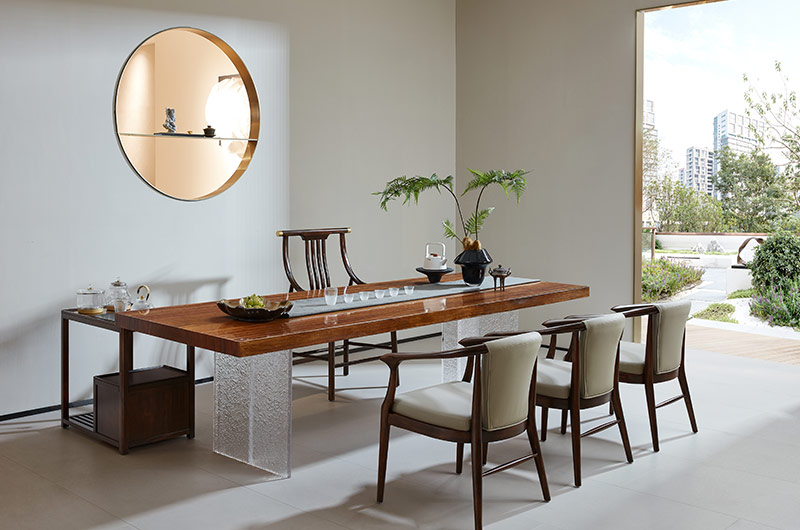
Some aspects of furniture quality are easier to feel than to see.
Ergonomics is one of them.
Seating Comfort
When evaluating a chair or sofa, consider:
- Seat height
- Seat depth
- Backrest angle
- Lumbar support
- Armrest position
- Cushion firmness
- Ease of standing up
Comfort is not universal.
A very deep sofa may suit relaxed lounging but feel awkward in a formal sitting area. An upright dining chair may be excellent during meals but unsuitable for extended relaxation.
The furniture should match the activity.
Dining Ergonomics
Dining furniture should allow users to sit naturally without contacting the table base or neighboring chairs.
The relationship between the chair and table should be evaluated together.
A chair can be well designed and a table can be well designed while the combination still fails.
Bedroom Furniture
Bed height affects how easily users sit down and stand up.
Bedside tables should normally relate closely to the sleeping surface so commonly used items remain accessible.
These small dimensional relationships make high quality home furniture feel intuitive.
Storage Accessibility
Storage should be designed around frequency of use.
Frequently accessed items need convenient heights and easy opening.
Storage capacity alone does not define quality. A very large cabinet can still function poorly if shelves, drawers or doors are difficult to access. A very large cabinet can still function.
Why Proportion Matters as Much as Material
One of the strongest indicators of good furniture design is proportion.
Even expensive materials cannot rescue furniture that feels incorrectly scaled.
Furniture-to-Room Scale
Measure the room before selecting major furniture.
Do not consider only whether the furniture physically fits.
Ask whether enough space remains around it.
A large sofa that technically fits between two walls may still overwhelm the room if circulation becomes restricted.
Visual Weight
Physical dimensions and visual dimensions are different.
A cabinet with solid floor-to-top sides may look heavier than an equally large cabinet raised on slim legs.
Dark finishes, thick tabletops, deep bases and closed panels also increase visual weight.
High quality home furniture uses these characteristics intentionally.
Circulation Space
Room planning should account for people in motion.
Consider:
- Chair pull-out space
- Walkways
- Door swings
- Drawer extension
- Wardrobe doors
- Access around beds
- Movement between seating areas
Furniture that creates constant obstacles will eventually feel poorly designed, regardless of material quality.
Relationship Between Furniture Pieces
Furniture does not exist independently.
A sofa relates to a coffee table. A dining chair relates to a table. A bedside unit relates to the mattress height.
These relationships should be evaluated before focusing on styling accessories.
Custom Furniture vs Ready-Made Furniture
Both approaches can produce high quality home furniture.
The correct choice depends on the room and the requirements.
When Ready-Made Furniture Works
Ready-made furniture can work well when:
- Room dimensions are straightforward
- Standard sizes fit comfortably
- Storage needs are conventional
- Existing furniture coordinates easily
- No unusual architectural conditions exist
Customization should never be treated as mandatory simply because it sounds more sophisticated.
When Custom Furniture Makes More Sense
Custom furniture becomes valuable when standard products require too many compromises.
Typical examples include:
- Irregular room dimensions
- Specific storage requirements
- Coordinated whole-room schemes
- Unusual table lengths
- Restricted circulation
- Integrated furniture
- Particular materials or finishes
An existing comparison of custom furniture and ready-made furniture also highlights an important principle: furniture should respond to project requirements rather than forcing the room to adapt to a predetermined product.
What Customization Should Actually Solve
Good customization solves a problem.
It might improve:
- Space efficiency
- Ergonomics
- Storage
- Material consistency
- Furniture proportions
- Visual continuity
- Functional integration
Changing only the color of a standard item is technically customization, but it does little to improve how the furniture interacts with the space.
High quality custom furniture begins with function and proportion.
How to Inspect High Quality Home Furniture
You do not need specialized laboratory equipment to identify many common quality indicators.
A structured inspection can reveal a surprising amount.
Material Check
Ask what the primary structural components are made from.
Examine exposed edges, undersides and interior areas where construction is easier to understand.
The general concept of furniture covers objects created to support activities such as sitting, sleeping, working and storage. This functional perspective is useful because materials should always be evaluated according to the task the furniture must perform.
Structural Check
Apply gentle pressure where appropriate.
Does the table move laterally?
Does the chair rock?
Does the cabinet feel unstable when a large door opens?
Minor movement can reveal issues that photography cannot.
Functional Check
Open drawers fully.
Open cabinet doors.
Sit in chairs.
Use extension mechanisms.
Check shelves.
Quality should remain evident once the furniture begins moving.
Finish Check
View the furniture under different lighting angles.
Flat lighting can hide sanding marks and uneven coatings.
Angled light often makes surface preparation easier to inspect.
Detail Check
Finally, inspect:
- Seams
- Corners
- Gap consistency
- Hardware installation
- Decorative transitions
- Hidden edges
- Undersides
The purpose is not to search for microscopic imperfections. Handmade and natural materials can contain minor variation.
You are looking for evidence of consistent control.
Common Mistakes When Choosing Home Furniture
Mistake 1: Judging Quality by Weight
Heavy furniture is not automatically high quality.
Weight can result from material choice, panel thickness or construction method.
The more useful question is whether the structure uses material efficiently.
Mistake 2: Assuming Solid Wood Guarantees Quality
Solid wood is a material, not a quality certificate.
Poor drying, unsuitable joinery, weak structural design or inadequate finishing can still result in disappointing furniture.
Mistake 3: Choosing Appearance Before Dimensions
Photographs encourage people to think about style first.
In real interiors, dimensions often matter more.
Measure first. Select second.
Mistake 4: Ignoring Internal Construction
Most long-term structural problems begin in places that are not immediately visible.
The underside of a table or inside of a cabinet may reveal more about construction quality than the top surface.
Mistake 5: Buying Every Piece as a Matching Set
Matching sets create consistency quickly, but they can also flatten the visual hierarchy of a room.
A more considered interior often combines related pieces rather than identical pieces.
Mistake 6: Selecting Furniture Independently
A dining table should not be chosen without considering chairs.
A sofa should not be chosen without considering circulation and coffee table dimensions.
Furniture performs as a system.
Mistake 7: Following Trends Too Literally
Distinctive colors and unusual forms can be interesting, but large furniture normally remains in an interior longer than small decorative objects.
Use trend-driven ideas selectively and allow the main pieces to depend on proportion, material and craftsmanship.
How to Build a Consistent Whole-Home Furniture Scheme
High quality home furniture becomes more effective when individual pieces contribute to a coordinated interior.
Coordination does not mean repetition.
Start with Material Direction
Choose a primary material family.
For example, a project may use warm solid wood as the dominant furniture material and introduce stone, fabric and metal selectively.
This creates continuity without requiring every piece to be identical.
Create a Visual Hierarchy
Decide which furniture should attract attention.
Usually, each room needs only one or two major focal pieces.
Examples include:
- Living room sofa
- Dining table
- Bed
- Feature cabinet
- Study desk
Secondary furniture can remain quieter.
Coordinate Rather Than Match
Furniture can share:
- Edge profiles
- Leg proportions
- Wood tone
- Hardware language
- Curves
- Upholstery families
They do not need to share every detail.
Subtle relationships often create a more sophisticated result than exact repetition.
Plan Before Adding More Furniture
When a room feels incomplete, adding another object is not always the solution.
Sometimes the issue is poor spacing, incorrect lighting or weak furniture hierarchy.
Before purchasing another piece, ask whether the room needs more furniture or simply better arrangement.
How to Maintain High Quality Home Furniture
Good furniture still requires appropriate care.
Maintenance should protect materials without introducing unnecessary treatments.
Daily Cleaning
Use a soft cloth for routine dust removal.
Follow material-specific care instructions for wood, leather, fabric, stone and metal.
Avoid aggressive cleaning products unless the finish manufacturer specifically recommends them.
Surface Protection
Use suitable protective pads beneath objects that may introduce:
- Heat
- Moisture
- Abrasion
- Sharp edges
Spills should generally be addressed promptly.
Environmental Stability
Natural materials react to environmental changes.
Extreme heat, moisture or prolonged direct exposure can influence wood, upholstery and surface finishes.
Keeping the indoor environment reasonably stable supports long-term furniture performance.
Hardware and Structural Maintenance
Periodically inspect moving hardware and accessible connections.
A small issue such as a loose handle or adjustable component is easier to address before it begins affecting surrounding parts.
Maintenance should focus on early correction rather than waiting for functional failure.
A Practical Furniture Quality Checklist

Use this checklist when comparing high quality home furniture.
Materials
- Are the main materials clearly identified?
- Is the material appropriate for the component?
- Does the visible wood grain appear intentionally selected?
- Are upholstery materials and internal cushioning specified?
Structure
- Does the furniture remain stable?
- Are major joints clean?
- Does the structure make sense for the load?
- Are long spans properly supported?
Craftsmanship
- Are surfaces smooth?
- Are edges consistent?
- Are repeated gaps controlled?
- Are corners clean?
- Are upholstery seams aligned?
Function
- Do drawers open smoothly?
- Do doors align?
- Is the seating comfortable?
- Are storage areas accessible?
- Do adjustable mechanisms operate reliably?
Proportion
- Does the furniture suit the room?
- Is enough circulation space available?
- Does the piece feel visually balanced?
- Does it coordinate with neighboring furniture?
Long-Term Use
- Is the design dependent on a short-lived trend?
- Can major surfaces be maintained appropriately?
- Are moving parts accessible?
- Does the furniture support its intended daily activity?
The more confidently these questions can be answered, the easier it becomes to distinguish genuine quality from surface-level presentation.
Conclusion
High quality home furniture is not defined by one material, one construction method or one visual style.
Quality emerges from the relationship between materials, structural design, craftsmanship, ergonomics, function and spatial planning.
Start by understanding what each piece must do. A dining chair needs reliable joints and comfortable proportions. A table needs structural support and practical clearance. A bed needs a stable support system. A cabinet needs precise alignment and usable storage.
Then consider the room.
Furniture should leave enough space for movement and relate appropriately to nearby pieces. A technically excellent product can still be the wrong choice when its scale or function does not suit the interior.
Finally, inspect details.
Look beneath surfaces, operate moving components, examine joints, check alignment and consider how materials are used rather than simply how they are described.
The most convincing high quality home furniture usually does not need to announce its quality through excessive decoration. You notice it through balanced proportions, smooth operation, comfortable use, stable construction and details that continue to make sense when you look closely.
That is what separates furniture that merely photographs well from furniture that genuinely works as part of a home.
FAQ
What defines high quality home furniture?
High quality home furniture combines suitable materials, stable construction, precise craftsmanship, functional design and good ergonomics. Quality should be visible in joint fit, smooth surfaces, consistent gaps and reliable hardware, but it should also be felt through comfort and everyday usability.
Is solid wood always the best choice for high quality home furniture?
Not necessarily. Solid wood is excellent for many frames, tables, chairs and beds, while well-made veneer or engineered panels can perform effectively in large cabinet surfaces. The key is using each material appropriately and clearly identifying the construction.
How can I check furniture quality before choosing it?
Inspect visible and hidden surfaces, check joint fit and stability, open drawers and doors, sit in chairs and examine the underside where possible. Pay attention to material specifications, grain direction, edge finishing, hardware operation, dimensions and overall structural logic.
Is custom furniture better than ready-made furniture?
Neither is automatically better. Ready-made furniture works well when standard dimensions suit the room. Custom furniture becomes more useful when you need specific dimensions, storage, materials, proportions or coordinated room solutions that standard furniture cannot provide efficiently.
How do I choose high quality home furniture for a whole house?
Begin with room dimensions and function, then establish aconsistent material and design direction. Select major anchor pieces first and coordinate secondary furniture through proportion, wood tone, edge details or upholstery rather than making every piece identical.