
Table of Contents
Introduction
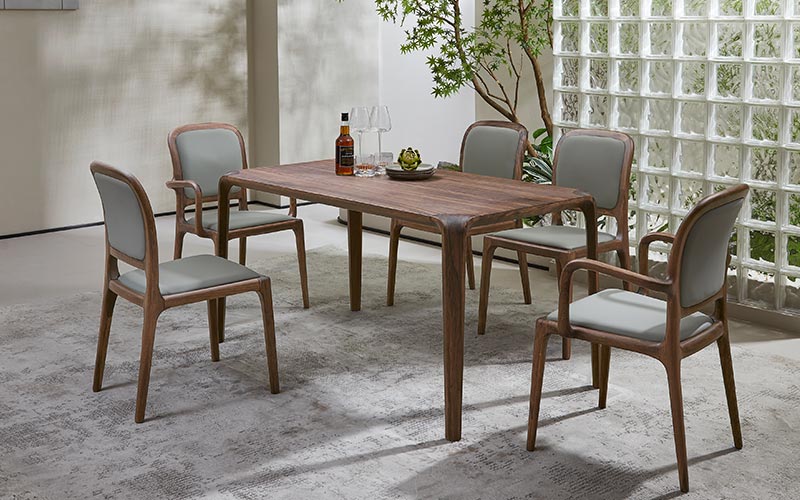
In contemporary interior design, the dining table is no longer just a functional surface for meals. It has become a central architectural element that defines spatial flow, social interaction, and overall room identity.
Among all dining furniture types, the long wood dining table has become especially popular due to its ability to combine aesthetics with functionality. It works not only as a dining surface but also as a gathering point for family life, social interaction, and even multifunctional use in open-plan spaces.
According to interior design trend discussions on platforms like ArchDaily and Dezeen, elongated dining tables are increasingly used in modern layouts because they improve spatial balance and encourage shared interaction across wider seating arrangements.
Why Long Dining Tables Create Better Social Interaction
One of the strongest advantages of a long wood dining table is how it influences human interaction.
Unlike square or round tables, long tables:
- Allow linear conversation flow
- Support larger group seating
- Create structured seating hierarchy
- Encourage inclusive dining experiences
This makes them ideal for both residential and project-based interiors where social functionality is a priority.
Psychology-based interior studies referenced in environmental design literature suggest that seating arrangement significantly affects communication patterns. Linear seating encourages group awareness while maintaining individual comfort zones.
Material Importance: Why Solid Wood Makes a Difference
The material used in a long dining table directly affects its stability, appearance, and lifespan.
Solid wood is preferred because it offers:
- High structural strength for extended spans
- Natural resistance to deformation
- Unique grain patterns across long surfaces
- Long-term durability under load
Unlike engineered materials that may weaken over time at connection points, solid wood maintains consistent performance across larger structural areas.
Design Principle: Proportion Is Everything
A long dining table must be carefully proportioned to avoid visual imbalance.
Key design principles include:
- Table length must match room scale
- Width must allow comfortable shared dining
- Height must align with ergonomic seating standards
- Leg placement must support both structure and legroom
Poor proportion can make a room feel either overcrowded or underutilized.
Seating Flow Optimization: How Long Tables Improve Space Usage
A long wood dining table improves seating efficiency in multiple ways:
- Increases seating capacity without expanding footprint width
- Aligns seating in a structured, organized manner
- Improves circulation around dining zones
- Supports flexible seating arrangements
This makes it particularly effective in open-plan layouts where space definition is required without physical partitions.
Long Wood Dining Table Layout Strategy Table
| Layout Factor | Recommended Approach | Functional Benefit |
|---|---|---|
| Room alignment | Centered or axis-aligned placement | Balanced spatial flow |
| Seating distribution | Equal spacing on both sides | Improved comfort and symmetry |
| Lighting setup | Linear overhead lighting | Enhanced visual focus |
| Material pairing | Wood + neutral soft textures | Warm and balanced aesthetic |
| Circulation space | Minimum clearance around table | Smooth movement flow |
| Decorative approach | Minimal centerpiece styling | Avoid visual clutter |
Interior Styling Direction: How to Make a Long Table Feel Balanced
A long wood dining table can easily become visually dominant if not styled correctly.
To maintain balance:
- Use soft lighting instead of harsh overhead lighting
- Keep tabletop decoration minimal
- Balance long horizontal lines with vertical elements (lighting or wall décor)
- Combine with soft seating materials to reduce visual heaviness
This creates a dining environment that feels intentional and comfortable rather than oversized or empty.
Real Design Insight: Why Long Tables Work in Open Spaces
In open-plan interiors, defining functional zones is essential.
A long dining table naturally acts as a spatial divider between:
- Kitchen zones
- Living areas
- Circulation pathways
Instead of using walls or partitions, the table itself becomes the organizing structure of the space.
This is why many modern interior projects featured on platforms like Houzz and Dezeen rely on long dining tables as spatial anchors.
Common Mistakes When Choosing a Long Dining Table
1. Ignoring Room Proportion
A table that is too long for the space can disrupt movement flow.
2. Overcrowding the Table
Too many chairs reduce comfort and visual clarity.
3. Poor Lighting Planning
Improper lighting can make the table feel visually heavy.
4. Neglecting Structural Support
Long spans require strong internal structure to avoid warping over time.
Why Wood Is the Best Material for Long Dining Tables
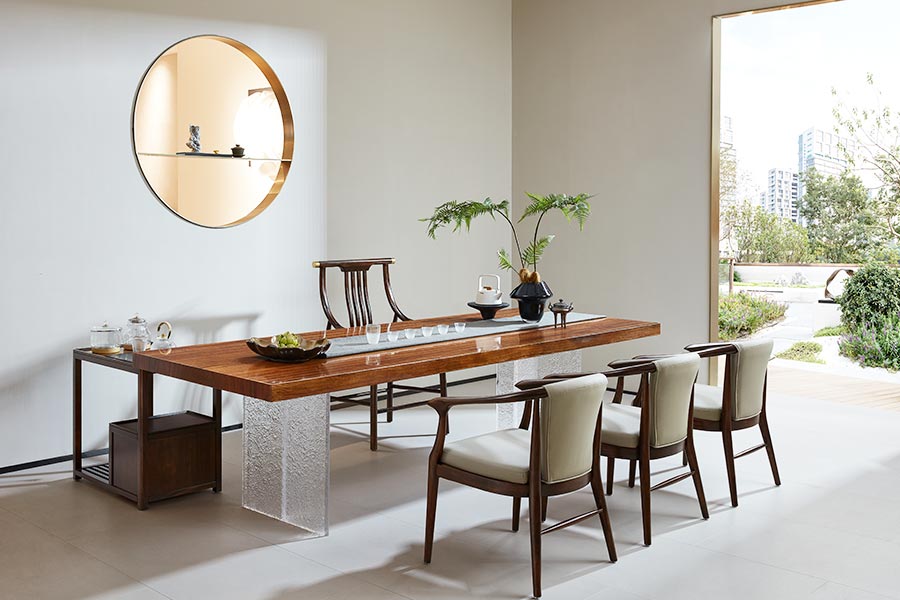
Wood remains the preferred material because it offers:
- Natural strength distribution
- Aesthetic warmth
- Structural flexibility
- Long-term usability
In furniture engineering references, wood is consistently highlighted as one of the most stable materials for long-span furniture structures due to its grain-based load distribution properties.
Internal Resources for Deeper Understanding
You may also explore related topics:
- Solid Wood Dining Furniture Collection
- Custom Dining Table Solutions
- Modern Living Room Layout Guide
- Wood Joinery Craftsmanship Guide
Industry References and Design Inspiration
For further reading on design trends and spatial planning:
- Dezeen Interior Design Trends
- ArchDaily Architecture & Interiors
- Houzz Dining Room Inspiration
- Interior Design Magazine Insights
Conclusion
A long wood dining table is more than a furniture piece—it is a spatial organizing element that shapes how people interact, move, and experience a room.
When properly designed with balanced proportions, quality materials, and thoughtful layout planning, it becomes the centerpiece of modern dining environments.
It represents a shift in interior design toward openness, shared experience, and functional elegance.
FAQ
What is a long wood dining table used for?
It is used for dining, entertaining, and creating structured seating in larger or open spaces.
Is a long dining table suitable for small rooms?
It depends on layout planning. Proper proportion and circulation space are essential.
Why choose wood for long dining tables?
Wood provides structural stability and natural load distribution across long spans.
How many people can a long dining table accommodate?
It varies based on design, but long tables are generally designed for larger group seating.
What makes a good long dining table design?
Balanced proportions, strong structure, proper seating flow, and good material selection.
Looking for a High-Quality Long Wood Dining Table?
If you want a durable and well-crafted long wood dining table designed for modern dining spaces, explore our collection or contact us for customized solutions tailored to your project requirements.