
Table of Contents
Introduction
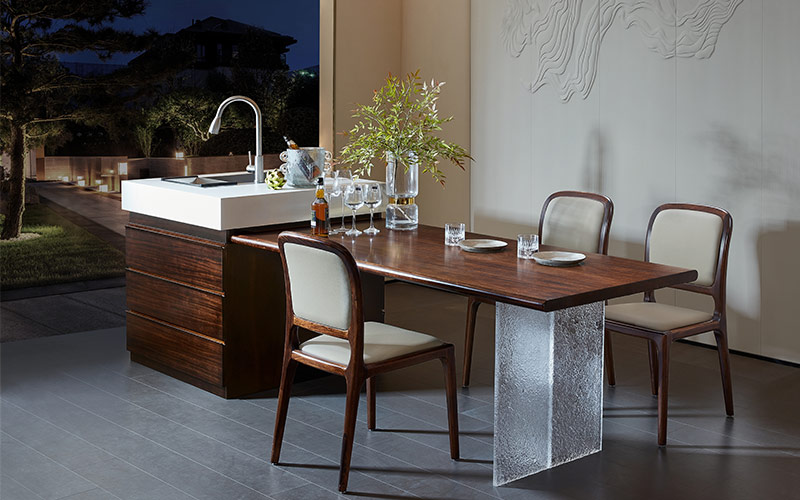
New Chinese Style Teak Furniture is not simply traditional furniture placed inside a modern room. Its real value comes from reinterpretation: classical proportions become lighter, decorative details become quieter, and traditional ideas about balance, order, craftsmanship, and natural materials are adapted to the way people live today.
Teak fits this design language particularly well. Its visible grain, warm tone, substantial feel, and ability to work with restrained forms allow designers to create furniture that feels rooted in tradition without making an interior look historical or overly formal.
The strongest New Chinese interiors are usually not the ones with the most obvious cultural decoration. They are the ones where proportion, materials, negative space, furniture placement, and craftsmanship work together naturally.
In this guide, you will learn:
- What defines New Chinese Style Teak Furniture
- How it differs from traditional Chinese and minimalist furniture
- Which design elements give furniture a New Chinese character
- How teak works in living, dining, bedroom, study, and tea spaces
- How to judge structure, proportions, grain, and finish
- How to combine teak with stone, fabric, leather, and metal
- When customized furniture makes sense
- Which common design mistakes can make a room look dated
- How to maintain a balanced New Chinese interior over time
What Is New Chinese Style Teak Furniture?
New Chinese Style Teak Furniture combines elements associated with traditional Chinese furniture design with the requirements of contemporary interiors.
Instead of reproducing historical furniture exactly, designers simplify familiar forms, reduce decorative density, improve ergonomics, and adapt dimensions to modern residential and commercial spaces.
The result is furniture that may feel culturally recognizable without appearing like an antique reproduction.
Traditional Ideas, Contemporary Expression
Traditional Chinese furniture developed distinctive structural approaches and furniture forms over a long history, including frame-and-panel construction and familiar categories such as chairs, tables, beds, cabinets, and stools.
New Chinese design does not need to reproduce these forms literally. A curved chair back, framed cabinet door, symmetrical layout, raised base, or carefully controlled proportion may be enough to reference the original design language.
Why Teak Works with This Style
Teak has enough natural character to become part of the visual identity of a piece without requiring excessive ornament.
When designers reduce carving and decorative elements, grain, joints, edges, proportions, and surface treatment become more visible. This makes material selection especially important.
For New Chinese Style Teak Furniture, the wood should not simply act as a structural material. It should contribute directly to the visual rhythm of the furniture.
1. Let Proportion Define the Style
One of the most important principles of New Chinese design is proportion.
Traditional-looking details will not create a convincing interior if a sofa is too bulky, a cabinet is too tall, or a dining table overwhelms the available space.
Horizontal Balance
Many successful New Chinese furniture pieces emphasize horizontal lines.
Low cabinets, elongated coffee tables, wide headboards, and restrained sofa frames can create a calm visual direction across the room. Horizontal forms are particularly useful in open interiors because they maintain sightlines and avoid unnecessary visual obstruction.
Vertical Rhythm
Vertical components should be used selectively.
Chair backs, cabinet frames, screens, and table legs can introduce upright visual rhythm, but they should not compete with one another. When too many tall elements are placed together, an otherwise calm room may begin to feel formal and rigid.
A Practical Proportion Test
Before selecting a piece, ask three questions:
- Does its height work with the surrounding furniture?
- Does its width leave enough negative space?
- Does its visual weight match the size of the room?
The right answer is rarely “make everything smaller.” Large furniture can work beautifully when the structure feels visually light and sufficient space remains around it.
2. Use Traditional Forms Without Copying Them
New Chinese Style Teak Furniture works best when traditional references are interpreted rather than copied.
This is one of the clearest differences between New Chinese and reproduction-style furniture.
Simplified Horseshoe-Back Forms
Traditional curved chair backs can be reduced into smoother, more ergonomic forms.
For example, a contemporary teak dining chair can use a curved back inspired by traditional horseshoe-back seating while simplifying the structure into a lighter silhouette suitable for modern dining and living spaces.
The important design lesson is not to reproduce every historical detail. It is to understand why the original line was visually effective and then adapt it to contemporary proportions and comfort.
Framed Panels
Frame-and-panel ideas can work particularly well on wardrobes, sideboards, TV cabinets, and storage units.
In a modern interpretation, panels can remain almost completely plain. Grain direction, subtle recessed edges, and carefully proportioned frames provide enough visual detail.
Lattice Details
Lattice patterns can establish cultural character quickly, which is also why they are easy to overuse.
A small openwork section on a cabinet, chair, screen, or sofa back may create a useful focal point. Repeating the same motif across every piece usually weakens the effect.
The 80/20 Approach
A useful design rule is to let approximately 80 percent of the room communicate through proportion, natural materials, and contemporary simplicity, while a smaller portion carries more recognizable traditional references.
This is a design principle rather than a strict mathematical formula. Its purpose is to prevent themed decoration from overpowering the room.
3. Make Teak Grain Part of the Design
In heavily decorated furniture, carving and ornament attract attention first. In New Chinese Style Teak Furniture, the wood itself often becomes the decorative surface.
This changes the way material quality should be evaluated.
Grain Direction
Grain direction affects both appearance and visual continuity.
Long tabletops usually look calmer when the dominant grain follows the length of the piece. Cabinet fronts can use grain direction to create symmetry, continuity, or deliberate contrast.
Randomly arranged grain may make a simple piece feel unnecessarily busy.
Natural Variation
Solid wood is not perfectly uniform.
Subtle changes in grain and tone are part of its natural character. The goal should therefore be controlled coordination rather than artificial uniformity.
When several pieces are placed in one room, they should belong to the same general material language without appearing as though every surface was printed from an identical pattern.
Edge Treatment
Edges deserve particular attention in minimalist furniture.
A very sharp rectangular edge can make teak feel architectural and formal. A small radius or softened edge produces a quieter, more tactile appearance.
Curved edges are especially effective on dining tables, coffee tables, beds, and furniture used in high-traffic areas.
4. Balance Solid Wood with Negative Space
One of the most common misconceptions about solid wood furniture is that more material automatically means better quality.
For New Chinese Style Teak Furniture, excessive visual mass can undermine the entire design.
Raised Furniture
Legged sofas, cabinets, beds, and sideboards allow more floor area to remain visible.
This simple detail can make substantial solid wood furniture appear lighter and can help a room feel more open.
Open Structures
Open chair backs, recessed bases, floating shelves, and slim support frames reduce visual density.
These features are particularly effective in living rooms and studies where several pieces of furniture may appear within the same sightline.
Why Empty Space Matters
Negative space is not unused space.
It gives the eye somewhere to rest and allows the outline of individual furniture pieces to remain readable. In New Chinese interiors, the empty area between objects can be just as important as the objects themselves.
5. Choose New Chinese Style Teak Furniture by Room
The design principles may remain consistent throughout an interior, but each room requires a different balance between appearance and function.
| Space | Recommended Furniture | Main Design Priority | Details to Check |
|---|---|---|---|
| Living room | Sofa, coffee table, side table, TV cabinet | Visual openness | Seat comfort, storage, circulation |
| Dining room | Dining table, chairs, sideboard | Proportion and ergonomics | Chair clearance, table support |
| Bedroom | Bed, bedside table, wardrobe | Calm visual rhythm | Bed support, storage, headboard scale |
| Study | Desk, chair, bookshelf | Function and concentration | Legroom, cable management, shelving |
| Tea room | Tea table, chairs, display storage | Atmosphere and restraint | Table height, seating relationship |
| Open-plan space | Coordinated furniture group | Material continuity | Repetition and visual hierarchy |
Living Room
The living room is often where New Chinese Style Teak Furniture has the strongest visual impact.
Rather than filling the room with an entire matching set, start with one dominant piece. This might be a solid wood sofa frame, a long coffee table, or a structured storage cabinet.
Supporting furniture should be quieter.
If the sofa already includes a visible wood frame and traditional-inspired details, the coffee table can use an extremely simple form. This creates hierarchy instead of repetition.
Dining Room
A dining room should prioritize ergonomics as much as appearance.
Table length, chair width, backrest angle, leg placement, and clearance all affect daily comfort. Decorative details should be considered only after these relationships work correctly.
A long teak table can create a strong architectural centerpiece, while curved chairs can soften the overall composition.
Bedroom
New Chinese bedroom furniture should generally feel quieter than living room furniture.
A teak bed with a broad but restrained headboard can establish the main visual theme. Bedside tables, benches, and wardrobes should then support it rather than compete with it.
Heavy carving on every bedroom piece can make a restful space feel visually busy.
Study
The study is a particularly natural environment for New Chinese furniture because the style works well with restrained layouts and natural materials.
A teak desk may provide the main visual focus, while bookshelves or cabinets use simpler surfaces.
Cable routing, drawer placement, working height, and leg clearance should remain part of the design rather than being treated as technical details added later.
Tea Room
A tea room benefits from restraint.
One table, a small group of comfortable chairs, and carefully selected storage may be enough. Decorative objects can then be added selectively.
Furniture should create the atmosphere rather than depend on decoration to create it.
6. Combine Teak with Contemporary Materials
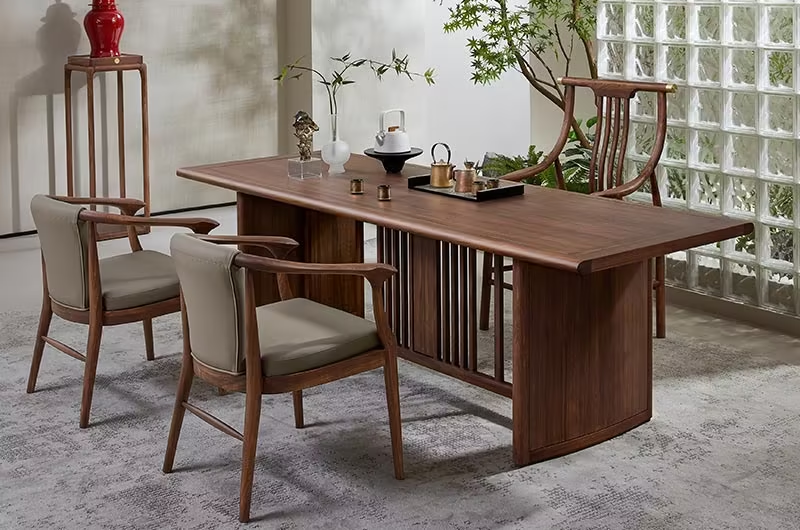
A New Chinese interior does not need to consist entirely of wood.
In fact, using teak everywhere can reduce contrast and make the room appear heavier than intended.
Teak and Stone
Stone creates a useful contrast with warm wood.
It can appear on coffee table surfaces, side tables, flooring, wall details, or decorative objects. Smooth stone emphasizes the texture of wood because the two materials reflect light differently.
Teak and Fabric
Fabric softens the architectural character of solid wood.
Neutral upholstery can make a teak sofa or lounge chair feel more comfortable and contemporary. Textured fabrics work particularly well when the furniture frame is simple.
Teak and Leather
Leather creates a more structured appearance.
It can work particularly well on dining chairs, armchairs, benches, and headboards. The leather should complement the wood rather than closely copy its color.
Teak and Metal
Metal should usually play a supporting role.
Thin metal trims, handles, feet, or connectors can introduce contemporary precision without changing the overall character of the furniture.
A small amount is often enough.
7. Evaluate Construction Before Decorative Detail
New Chinese Style Teak Furniture is often associated with craftsmanship, but craftsmanship should be judged through construction rather than decorative complexity.
A simple chair with precise joints may demonstrate more skill than a heavily decorated piece with weak structural connections.
Check Joint Fit
Inspect where legs meet rails, where chair backs meet frames, and where cabinet structures connect.
Joints should fit consistently without obvious gaps or misalignment.
Traditional mortise-and-tenon concepts can be highly suitable for solid wood furniture, but the correct joint depends on the direction of force, material dimensions, and furniture function.
Check Structural Logic
Ask how the load travels through the piece.
For a dining chair, weight must transfer from the seat through the frame to the legs. For a table, the base needs to support both the tabletop and lateral movement.
For beds, center support and side-rail connections are especially important.
Check Movement
Functional parts should be tested whenever possible.
Drawers should move evenly. Doors should align. Extendable tables should operate smoothly. Chairs should remain stable on a level floor.
Craftsmanship is most convincing when it improves everyday use.
8. Understand the Difference Between Traditional, New Chinese, and Modern Minimalist Furniture
These styles can overlap, but they are not identical.
| Design Element | Traditional Chinese | New Chinese Style | Modern Minimalist |
| Decorative detail | Moderate to elaborate | Selective and simplified | Very limited |
| Cultural references | Strong | Subtle to moderate | Usually minimal |
| Furniture proportions | Often formal | Adapted for current interiors | Highly simplified |
| Material expression | Hardwood craftsmanship | Natural wood plus mixed materials | Broad material range |
| Joinery visibility | Often important | Selectively expressed | Often concealed |
| Upholstery | Limited in some forms | Common | Common |
| Color strategy | Rich wood tones | Warm neutral combinations | Neutral or monochromatic |
| Primary goal | Tradition and craftsmanship | Cultural continuity plus modern living | Functional visual simplicity |
Traditional Chinese Furniture
Traditional furniture places greater emphasis on historical forms, recognized construction methods, established proportions, and decorative vocabulary.
It may be the right choice when authenticity and historical character are central to the project.
New Chinese Style
New Chinese furniture retains selected cultural ideas while changing dimensions, comfort, materials, and visual weight.
It is particularly useful when a room needs cultural character without becoming a period interior.
Modern Minimalist Furniture
Minimalist furniture prioritizes reduction and function.
It may share clean lines with New Chinese furniture, but it does not necessarily contain cultural references.
The distinction is important for SEO as well as design: New Chinese Style Teak Furniture should not simply be described as “minimalist teak furniture.” Its value lies in the interaction between contemporary simplicity and cultural design logic.
9. Customize the Furniture Around the Space
Customization can be particularly valuable for New Chinese interiors because proportion has such a strong influence on the final result.
Changing only the dimensions of an existing piece, however, is not always enough.
Dimension Customization
Common adjustments include:
- Dining table length
- Table width
- Cabinet height
- Sofa configuration
- Seat dimensions
- Bed size
- Shelf spacing
- Drawer layout
Any major dimensional change should also trigger a structural review.
Extending a table without changing its support system, for example, can alter load distribution and stability.
Material Customization
Projects may combine teak with different upholstery, stone surfaces, hardware, or secondary materials.
Material samples should be evaluated together whenever possible. Looking at a wood finish in isolation does not show how it will interact with flooring, walls, fabrics, or lighting.
Finish Customization
Finish influences both color and perceived style.
A restrained low-sheen finish typically allows the grain to remain visually active, while a highly reflective surface may make the same furniture feel more formal.
For coordinated interior projects, the existing DYHwood guide to Chinese style furniture provides additional context on integrating Chinese-inspired furniture into different residential spaces.
Whole-Room Customization
A complete room should share proportional logic rather than simply repeat one decorative motif.
For example, a dining table and sideboard may share the same edge profile, while the chairs introduce a softer curve. This produces continuity without making every item look identical.
How to Evaluate New Chinese Style Teak Furniture Quality
A practical way to inspect furniture is to use five categories: Material, Structure, Proportion, Finish, and Function.
Material
Confirm which components are actually teak.
Do not assume that a product described broadly as teak furniture uses solid teak in every component. Large panels, drawer bottoms, upholstered sections, internal structures, and decorative parts may use different materials.
Clear material specifications improve purchasing confidence.
Structure
Look beyond the visible surface.
Chair frames, bed supports, table bases, cabinet joints, and moving hardware determine how a piece performs after repeated use.
Proportion
Stand several steps away from the furniture.
Does the top look too thick for the legs? Does the chair back appear oversized relative to the seat? Does the cabinet base visually support its width?
Good proportion should remain convincing from multiple viewing angles.
Finish
Inspect large flat surfaces and edges separately.
Look for:
- Consistent sanding
- Smooth transitions
- Controlled sheen
- Clean corners
- Even treatment around joints
- Clear grain
- No obvious surface buildup
The finish should support the natural appearance of the timber rather than hide poor surface preparation.
Function
Finally, use the furniture as intended.
Sit in the chair. Open the drawer. Move around the table. Check storage access.
Aesthetic judgment is important, but furniture ultimately needs to function comfortably within daily life.
How to Style New Chinese Style Teak Furniture
The easiest way to make a New Chinese interior feel dated is to turn every decorative decision into an obvious cultural reference.
A more effective approach is to build the room from materials and proportions first.
Start with One Anchor Piece
Choose one visually important item:
- Sofa
- Dining table
- Bed
- Tea table
- Display cabinet
Allow this piece to establish the strongest design language.
Add Quieter Supporting Furniture
Secondary pieces should share material or proportion cues without repeating every detail.
If the main sofa uses latticework, for example, the side table probably does not need another lattice pattern.
Use Art Selectively
Artwork, ceramics, textiles, screens, and sculptural objects can add cultural context.
They should not be required to explain the furniture. Well-designed New Chinese Style Teak Furniture should already communicate its character through form and craftsmanship.
Control the Color Palette
Useful supporting tones include:
- Warm white
- Soft gray
- Sand
- Clay
- Muted green
- Charcoal
- Warm neutral textiles
A restrained palette allows the teak grain to remain visible without making the room appear monochromatic.
Common Mistakes When Choosing New Chinese Style Teak Furniture
Mistake 1: Using Too Many Traditional Motifs
Repeated latticework, carving, calligraphy, screens, and decorative symbols can turn a contemporary interior into a themed environment.
Choose a few references and allow them room to breathe.
Mistake 2: Ignoring Ergonomics
A beautiful chair is unsuccessful if the backrest is uncomfortable.
A formal-looking table is unsuccessful if chair placement is restricted by its base.
Design should begin with use.
Mistake 3: Choosing Furniture That Is Too Heavy
Large solid wood sections can make a room appear smaller.
Slimmer rails, raised bases, open frames, and softer edges can maintain the presence of teak while reducing visual mass.
Mistake 4: Matching Everything
An entire room made from identical wood, identical upholstery, and repeated decorative details often appears less sophisticated than expected.
Controlled variation creates depth.
Mistake 5: Confusing New Chinese with Antique Reproduction
New Chinese Style Teak Furniture should respond to current lifestyles.
Storage, ergonomics, room dimensions, maintenance, cable management, upholstery, and flexible layouts matter just as much as cultural inspiration.
Mistake 6: Focusing Only on Appearance
Online photographs can show shape and finish but may reveal little about joints, support, internal materials, or hardware.
A proper evaluation includes material specifications and structural details.
Care and Maintenance of New Chinese Style Teak Furniture
Daily maintenance should be simple and consistent.
Routine Dusting
Use a soft cloth to remove dust from flat surfaces, joints, openwork details, and edges.
Dust accumulation is particularly noticeable around carved or recessed sections, so these areas may require slightly more attention.
Spill Management
Remove liquid spills promptly.
Do not allow moisture to remain around joints, upholstery edges, or panel seams.
Surface Protection
Use mats or protective pads beneath hot, wet, abrasive, or sharp objects.
This is especially important for dining tables, tea tables, bedside furniture, and desks that receive frequent surface contact.
Light Exposure
Natural wood may change gradually with prolonged light exposure.
Avoid leaving one area permanently covered while the rest of a tabletop receives continuous light, as uneven exposure can create visible differences over time.
Environmental Stability
Solid wood responds naturally to its surroundings.
A reasonably stable indoor environment helps reduce unnecessary expansion and contraction. Avoid placing furniture directly next to strong heat sources or in locations exposed to extreme environmental changes.
Finish Maintenance
Do not automatically apply oils, waxes, or polishes.
Different surface systems require different maintenance. Using an incompatible product can alter sheen, color, or adhesion.
Follow the care method appropriate to the original finish.
A Practical Selection Checklist
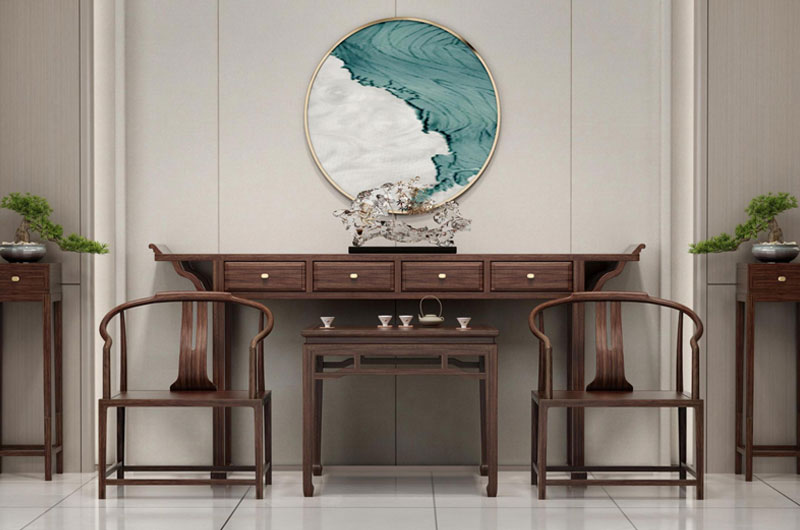
Before finalizing New Chinese Style Teak Furniture for an interior, review the following questions:
Design
- Does the piece have a clear contemporary character?
- Are traditional references restrained?
- Does it complement the architecture rather than compete with it?
Material
- Are the main materials clearly specified?
- Is teak solid, veneered, or combined with other substrates?
- Does the grain suit the design?
Construction
- Are major joints clean and stable?
- Does the support structure suit the dimensions?
- Are moving components properly aligned?
Ergonomics
- Is the seating comfortable?
- Does the table work with the intended chairs?
- Are storage areas easy to access?
Space Planning
- Is enough circulation space available?
- Can doors and drawers open fully?
- Does the furniture maintain appropriate negative space?
Styling
- Is there one clear visual hierarchy?
- Are wood tones coordinated rather than excessively matched?
- Are decorative references being repeated too often?
If several answers are uncertain, it is worth revisiting the selection before building the rest of the room around it.
Conclusion
New Chinese Style Teak Furniture succeeds when cultural references, natural materials, contemporary proportions, and practical living requirements are treated as one design problem.
The strongest pieces do not depend on elaborate decoration. Their identity comes from carefully controlled silhouettes, wood grain, joinery, negative space, subtle references to traditional forms, and proportions suited to current interiors.
For living rooms, the priority may be visual openness and comfortable seating. Dining spaces require careful relationships between tables and chairs. Bedrooms benefit from calmer forms, while studies and tea rooms can make greater use of structured timber furniture and restrained cultural details.
Teak adds warmth and material depth to this design language, but material alone does not determine quality. Structure, ergonomics, finish, grain selection, and functional planning remain equally important.
When these elements are considered together, New Chinese Style Teak Furniture can create an interior that feels neither historical nor trend-driven. Instead, it offers a quieter form of cultural continuity—one that translates traditional design thinking into spaces intended for contemporary life.
FAQ
What is New Chinese Style Teak Furniture?
New Chinese Style Teak Furniture combines teak with simplified elements inspired by traditional Chinese furniture. Clean lines, balanced proportions, subtle joinery, natural grain, modern ergonomics, and restrained decorative details help it fit contemporary interiors.
How is New Chinese Style Teak Furniture different from traditional Chinese furniture?
Traditional furniture usually follows stronger historical forms and decorative conventions. New Chinese furniture simplifies these references, adjusts proportions and comfort, and may combine teak with fabric, leather, stone, or metal to suit contemporary living spaces.
Is New Chinese Style Teak Furniture suitable for minimalist interiors?
Yes. The key is to select pieces with simple silhouettes, limited decoration, open structures, and controlled proportions. Teak provides natural warmth, while restrained styling allows the room to maintain the calm and negative space associated with minimalist interiors.
What should I check before choosing New Chinese Style Teak Furniture?
Check whether the material is clearly specified, then examine grain direction, joints, structural support, surface finish, dimensions, and ergonomics. Furniture should also leave sufficient circulation space and coordinate with other materials in the room.
Can New Chinese Style Teak Furniture be customized?
Yes. Dimensions, furniture configurations, upholstery, finishes, storage layouts, and material combinations can be adjusted for different interiors. Major size changes should also include a structural review so that stability and proportions remain appropriate.