
Table of Contents
Introduction
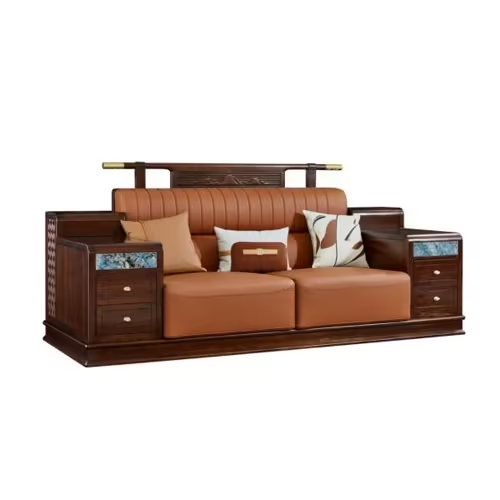
Modern interiors often rely on clean geometry, open layouts and carefully controlled material palettes. However, a room designed only around smooth surfaces and neutral colors can easily feel cold or unfinished. Modern teak furniture offers a practical way to introduce warmth, natural texture and visual depth without compromising a contemporary aesthetic.
The appeal of teak is not limited to its appearance. Its grain, natural color variation and structural qualities make it suitable for dining tables, chairs, beds, cabinets, coffee tables and complete furniture collections. When the material is combined with precise proportions and restrained detailing, it can support minimalist, modern organic, Japandi-inspired and contemporary Oriental interiors.
This guide explains how modern teak furniture is designed, evaluated, selected and coordinated. It also introduces a practical quality framework that helps homeowners, designers and project planners look beyond surface appearance and assess how a piece will perform within a real interior.
Key points covered in this guide include:
- The defining characteristics of modern teak furniture
- The main design styles used in contemporary interiors
- Room-by-room furniture selection
- Solid teak and teak veneer differences
- Joinery, grain, finish and construction quality
- Furniture proportions and circulation planning
- Customization for residential and commercial spaces
- Styling, cleaning and long-term maintenance
What Is Modern Teak Furniture?
Modern teak furniture refers to furniture that combines teak wood with contemporary design principles. These principles usually include simple forms, balanced proportions, limited decoration, functional layouts and an emphasis on the natural qualities of the material.
The word “modern” does not mean that every piece must look extremely minimal. It describes a design approach in which unnecessary ornament is removed and each structural element has a clear purpose.
The Material Behind the Design
Teak is a hardwood commonly used for furniture, architectural woodwork and other applications that require dimensional stability and long-term performance. Its appearance can range from warm honey tones to deeper brown shades, while the grain may be straight, softly waved or visually varied.
Natural color variation should not automatically be treated as a defect. In solid wood furniture, controlled variation often confirms that real timber has been used rather than a printed or artificially uniform surface.
What Makes the Style Modern?
Modern teak furniture is generally defined by several visible characteristics:
- Clean horizontal and vertical lines
- Simple silhouettes
- Controlled edge profiles
- Balanced solid and open areas
- Functional storage
- Minimal decorative carving
- Natural or low-sheen finishes
- Integration with stone, leather, fabric or metal
A well-designed piece does not need excessive decoration to attract attention. The grain, joinery, proportions and relationship between components become the main visual features.
Why Teak Works in Contemporary Interiors
The success of modern teak furniture comes from the balance between natural character and visual discipline. It provides enough variation to make a room feel warm, but it can still support the clean lines associated with contemporary design.
Natural Warmth Without Visual Heaviness
Teak has a warm visual tone, yet it does not need to make a room appear dark. Slim legs, raised bases, open shelving and recessed panels allow the material to feel lighter.
This is particularly useful in interiors that contain stone floors, plain walls or large architectural surfaces. The wood helps soften those elements without introducing unnecessary visual complexity.
A Material That Ages with Character
Solid wood develops subtle visual changes over time. Light exposure, handling and routine use may gradually alter the tone and sheen of the surface.
This natural development is different from sudden deterioration. A properly constructed and finished piece should age gradually while retaining its structural stability and functional value.
Compatibility with Mixed Materials
Modern teak furniture can be combined with:
- Natural stone
- Glass
- Woven fiber
- Leather
- Textured fabric
- Brushed metal
- Ceramic surfaces
- Neutral wall finishes
The most successful combinations usually establish one dominant material and use the others as supporting elements. If every surface competes for attention, the interior can lose visual clarity.
Main Modern Teak Furniture Styles
Modern teak furniture is not limited to one design language. Understanding the main style families makes it easier to select pieces that work together.
Modern Minimalist
Modern minimalist furniture emphasizes geometry, function and visual calm. Common features include flat cabinet fronts, straight legs, restrained edge details and concealed storage.
In this style, teak grain becomes the primary decoration. Handles, joints and hardware are often integrated into the design rather than displayed as separate visual features.
Modern Organic
Modern organic furniture combines simple forms with rounded corners, curved backrests and tactile surfaces. It feels softer than strict minimalism while remaining clean and contemporary.
Teak works well in this style because its grain supports the natural character of curved tables, sculpted chairs and low-profile seating.
Mid-Century Modern
Mid-century modern teak furniture often uses tapered legs, elevated cabinet bodies, gently curved chair backs and clear structural expression. The furniture usually appears light because much of the floor remains visible.
For current interiors, the style is most effective when selected carefully rather than recreated as a complete historical theme.
Japandi-Inspired
Japandi-inspired furniture combines visual simplicity, natural materials and quiet craftsmanship. Low furniture, warm neutral colors and uncluttered layouts are common.
Modern teak furniture can support this approach when it uses restrained proportions, matte finishes and minimal hardware.
Contemporary Oriental
Contemporary Oriental furniture interprets traditional spatial balance and craftsmanship through simplified forms. Rather than relying on heavy carving, it may use framed panels, symmetrical layouts or subtle references to traditional joinery.
The result can feel culturally grounded without becoming overly formal or decorative.
Modern Teak Furniture for Different Rooms
Furniture should be selected according to how each room is used. A piece that looks attractive in isolation may still be unsuitable if its scale, storage or circulation requirements do not match the space.
| Room | Recommended Teak Furniture | Main Selection Priority | Common Planning Risk |
|---|---|---|---|
| Living room | Sofa frames, coffee tables, side tables, media cabinets | Visual balance and circulation | Oversized tables or heavy storage |
| Dining room | Dining tables, chairs, benches, sideboards | Seating comfort and table clearance | Choosing appearance before dimensions |
| Bedroom | Bed frames, bedside tables, wardrobes, benches | Stability and visual calm | Using too many dark wood surfaces |
| Study | Desks, bookshelves, cabinets, armchairs | Ergonomics and cable management | Insufficient legroom or storage |
| Tea room | Tea tables, stools, display cabinets | Scale and atmosphere | Excessive decoration |
| Open-plan area | Coordinated furniture collections | Material continuity | Repeating the same finish everywhere |
Living Room
In a living room, modern teak furniture often acts as a visual anchor. A coffee table, media cabinet or timber-framed armchair can introduce warmth without requiring every item to be made from the same material.
Low-profile furniture generally works well in open contemporary spaces. It maintains sightlines and allows architectural features to remain visible.
A teak coffee table should be selected in relation to the sofa rather than as an isolated object. Its height, length and distance from the seating area affect both comfort and circulation.
Dining Room
Dining furniture must balance appearance, comfort and repeated use. The table should provide enough usable surface while leaving sufficient space for chairs to move naturally.
Chair design deserves particular attention because backrest angle, seat depth and frame structure influence long-term comfort. A well-proportioned teak dining chair also shows how solid wood can be shaped into a visually light form without losing structural support.
For a coordinated dining room, the table and chairs do not need identical details. They should share one or two design elements, such as leg shape, edge profile or wood tone.
Bedroom
Modern teak bedroom furniture should create stability without making the room feel visually crowded. A platform bed with a simple headboard can become the main feature, while bedside tables and storage remain quieter.
The bed frame should be assessed for more than appearance. Central support, side-rail connections and slat placement affect how the frame performs over time.
In smaller bedrooms, raised legs and open space beneath selected pieces can help the room feel more spacious.
Study and Tea Room
Teak desks, shelves and cabinets can make a study feel warm and focused. Practical details such as cable openings, drawer dimensions, shelf spacing and legroom should be planned before decorative features.
For tea rooms, restraint is especially important. A low table, comfortable chair and carefully placed cabinet often create a more convincing environment than a large number of themed objects.
How to Evaluate Modern Teak Furniture Quality
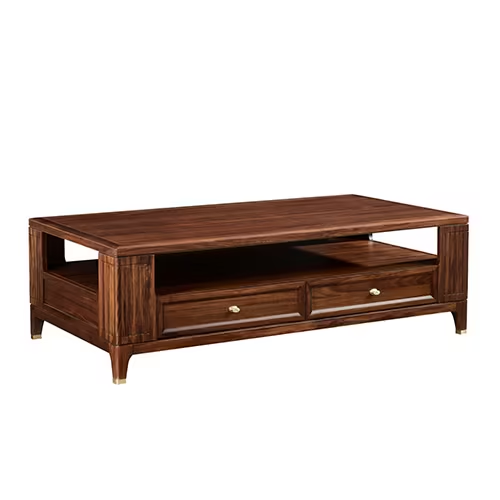
Furniture quality cannot be confirmed by color alone. Surface treatment can change how many wood species appear, while photography and lighting may hide construction details.
A more reliable evaluation method is the Form–Grain–Function–Finish framework.
Form
Form refers to proportions, geometry and structural logic. Look at whether legs, rails, panels and surfaces appear visually balanced.
A table with an extremely wide top but insufficient support may look elegant in a photograph yet perform poorly in daily use. Good form connects appearance with engineering.
Grain
Observe whether the grain direction is appropriate for each component. On solid wood panels, grain should normally follow the length of the board and remain visually consistent with the construction.
Unexpected grain breaks may indicate multiple joined sections, veneer application or repairs. These are not always unacceptable, but they should be understood before selection.
Function
Test or review every moving component:
- Drawers should move evenly.
- Doors should align consistently.
- Chairs should remain stable on a flat surface.
- Tables should not twist or rock.
- Bed frames should have sufficient central support.
- Adjustable components should lock securely.
A product can have an attractive surface and still fail as furniture if its everyday functions have not been resolved.
Finish
The finish should feel consistent across visible surfaces, edges and corners. Uneven gloss, rough patches, excessive filler or visible sanding marks can indicate insufficient surface preparation.
A good finish protects the wood while preserving its natural texture. It should not make the surface appear artificially thick or plastic-like unless that effect is intentionally specified.
Joinery and Structural Support
Inspect the points where components meet. Mortise-and-tenon joints, dowels, reinforced corner blocks and well-fitted mechanical connections may all be appropriate when used correctly.
The important issue is not whether one joint type is advertised as universally superior. The joint must suit the direction of force, thickness of the material and intended use of the furniture.
Solid Teak Furniture vs Teak Veneer
Solid teak and teak veneer can both appear in modern furniture, but they are different construction methods and should not be presented as interchangeable.
| Feature | Solid Teak Furniture | Teak Veneer Furniture |
| Main surface | Timber throughout the component | Thin teak layer over a core |
| Edge appearance | Grain continues through the edge | Edge may require separate treatment |
| Repair potential | Can often be refinished carefully | Limited by veneer thickness |
| Weight | Usually heavier | Depends on the core material |
| Grain control | Natural board-to-board variation | Easier to create consistent patterns |
| Best application | Structural frames and long-term furniture | Large panels and controlled surfaces |
When Solid Teak Is Suitable
Solid teak is well suited to chair frames, table legs, bed structures, rails and furniture where the edge of the material remains visible.
It also allows designers to shape rounded corners, sculpted transitions and exposed joints without revealing a separate core.
When Veneer May Be Appropriate
Teak veneer can be useful on wide cabinet panels or large flat surfaces where grain matching and dimensional control are important.
The key issue is transparency. Product specifications should clearly identify whether each major component is solid timber, veneer, engineered board or another material.
How to Select the Right Furniture Proportions
Modern furniture often looks simple, but simplicity makes proportion errors more noticeable. A table that is slightly too wide or a cabinet that is slightly too tall can disrupt the balance of an entire room.
Measure Circulation Space
Start by identifying the routes people use most frequently. Furniture should not block doors, storage access or movement between rooms.
Do not measure only the furniture footprint. Include the space required to pull out chairs, open cabinet doors and move around seating.
Balance Visual Weight
Visual weight is influenced by more than physical size. Dark finishes, thick panels and solid bases make furniture appear heavier.
A large teak table can still feel visually light when it has a slim top, recessed support structure or open base. Conversely, a small cabinet can appear heavy if every surface is thick and enclosed.
Consider Human Scale
Seat height, table height, backrest angle and armrest position affect usability. These dimensions should be coordinated rather than selected independently.
For example, an attractive dining chair may not work with a particular table if its armrests cannot pass beneath the tabletop.
Plan Furniture as a Complete System
Instead of selecting individual pieces one at a time, create a room schedule that records:
- Product dimensions
- Clearances
- Finish
- Main material
- Secondary material
- Storage function
- Visual priority
- Relationship to nearby furniture
This simple method reduces duplicated functions and prevents a room from accumulating too many competing statement pieces.
Custom Modern Teak Furniture
Standard furniture can work well in straightforward rooms, but complex layouts often require more precise solutions. Custom modern teak furniture allows dimensions, materials and functions to be coordinated with the actual space.
Dimensions and Layout
Customization may involve changing:
- Table length and width
- Cabinet height
- Shelf spacing
- Seat depth
- Bed dimensions
- Drawer configuration
- Door direction
- Leg position
Dimension changes should be reviewed structurally. Increasing the length of a table, for example, may require changes to the base, rail system or material thickness.
Material Combinations
Teak can be combined with stone, fabric, leather, glass and metal. Each material should have a clear role.
A stone surface may provide contrast on a coffee table, while teak softens the overall appearance. Upholstery may improve comfort, while the wood frame maintains visual continuity across a furniture collection.
Finish and Color Coordination
Finish samples should be reviewed under the lighting conditions of the intended room. A wood tone that appears balanced under bright showroom lighting may look different in a softly lit interior.
When several teak pieces are used together, perfect color uniformity is not always necessary. A controlled range of related tones often appears more natural than an artificially identical finish.
Whole-Room Coordination
Custom work is most valuable when it resolves relationships between objects. A bed, bedside tables and wardrobe should share proportional logic rather than simply use the same color.
For projects involving coordinated rooms, a custom furniture consultation can establish dimensions, materials, functional requirements and finish references before production decisions are finalized.
How to Style Modern Teak Furniture
The goal of styling is not to fill every available area. It is to create a hierarchy in which major furniture, supporting pieces and decorative objects have clearly different roles.
Build a Controlled Material Palette
Limit the main room to a small number of dominant materials. A balanced contemporary palette might include teak, light stone, textured fabric and a restrained metal detail.
Too many wood species can make the interior appear unplanned. When different woods are necessary, select tones with an intentional contrast rather than trying to create an imperfect match.
Use Contrast Carefully
Warm teak works well against soft white, muted gray, clay, sand and other natural colors. Darker walls can also be effective when the room has sufficient lighting and the furniture silhouette remains clear.
Contrast should help define the furniture, not separate it completely from the rest of the space.
Coordinate Lighting and Textiles
Directional lighting can reveal grain and texture, while diffused lighting creates a calmer atmosphere. Avoid relying on a single ceiling fixture to illuminate the entire room.
Textiles should complement the wood without repeating its color too closely. Bouclé, linen-like fabric, woven materials and smooth leather can add tactile contrast.
Avoid Overcrowding
Modern teak furniture has a strong material presence. Leaving space around important pieces allows their form and grain to remain visible.
A room containing a teak dining table, sideboard, display cabinet and multiple decorative wood objects may feel repetitive. One dominant piece and a small number of supporting elements often create a stronger result.
Care and Maintenance
Modern teak furniture does not require complicated daily treatment, but consistent care helps protect the finish and maintain a stable appearance.
Routine Cleaning
Remove dust with a soft, dry or slightly damp cloth. Wipe in the direction of the grain when possible.
Avoid abrasive pads and aggressive cleaning agents. These can create uneven sheen or damage the surface coating.
Managing Sunlight
Continuous direct sunlight may gradually change the color of wood and upholstery. Curtains, blinds and thoughtful furniture placement can reduce uneven exposure.
Decorative objects should occasionally be moved so that the area beneath them does not age differently from the surrounding surface.
Managing Humidity
Solid wood responds naturally to environmental changes. Extremely dry or humid conditions can increase the risk of movement, small gaps or surface stress.
A stable indoor environment is more important than repeated application of oils or other treatments. Follow the manufacturer’s care instructions because different finishes require different maintenance methods.
Preventing Surface Damage
Use protective pads beneath hot, wet, rough or sharp objects. Spills should be removed promptly rather than left to dry.
When moving furniture, lift it from the structural frame. Pulling a heavy table or cabinet across the floor can place unnecessary stress on legs and joints.
Long-Term Maintenance
Do not apply oil, wax or polish without confirming compatibility with the existing finish. Adding the wrong product may create uneven color, a sticky surface or difficulties during future refinishing.
Minor movement or hardware changes should be addressed early. Tightening a suitable connection is easier than repairing damage caused by prolonged instability.
Common Selection Mistakes

Choosing by Color Alone
Color can be altered through stains, lighting and photography. Construction, grain, weight, joinery and material specifications provide more useful evidence of quality.
Ignoring the Secondary Materials
A product described as teak furniture may also contain upholstery, stone, metal hardware or engineered panels. Each material affects appearance, maintenance and performance.
Selecting Individual Pieces Without a Room Plan
Several attractive pieces can still create an unbalanced room. Dimensions, visual weight and function should be reviewed together.
Assuming Thicker Means Better
Excessive thickness can make modern teak furniture appear heavy. Structural efficiency is more important than using the largest possible components.
Matching Every Wood Surface
Perfectly matching the floor, doors, cabinets and furniture can remove visual depth. Related tones with controlled contrast usually produce a more natural interior.
Overlooking Functional Testing
Drawer movement, door alignment, seat comfort and frame stability should be reviewed before decorative details. Furniture must work well before it can contribute successfully to the interior.
Conclusion
Modern teak furniture combines the warmth of natural timber with the clarity of contemporary design. Its success depends on more than the reputation of the material. Proportion, grain selection, joinery, finish, ergonomics and room planning all influence how the furniture looks and performs.
The most reliable selection process begins with the room rather than the product. Measure the available space, identify circulation routes and define the functions each piece must provide. Then evaluate furniture using the Form–Grain–Function–Finish framework.
A well-planned teak interior does not need to use wood everywhere. One carefully selected dining table, bed, cabinet or seating piece can establish warmth and character, while complementary materials keep the space balanced. When dimensions and functions are coordinated across the room, modern teak furniture can support interiors that feel refined, comfortable and lasting.
FAQ
What is modern teak furniture?
Modern teak furniture combines teak wood with clean lines, balanced proportions and practical functions. It usually avoids heavy decoration and highlights natural grain, precise joinery and simple forms suitable for contemporary, minimalist or modern organic interiors.
Is modern teak furniture suitable for small rooms?
Yes. Choose raised legs, slim frames, open bases and compact storage to reduce visual weight. Room measurements and circulation space are more important than the number of furniture pieces. A few well-proportioned items usually work better than a complete matching set.
How can I identify high-quality modern teak furniture?
Check the material specification, grain direction, joint fit, structural stability and surface consistency. Drawers and doors should move smoothly, chairs should remain stable, and tables should have support appropriate to their length, weight and intended use.
Is solid teak better than teak veneer?
Neither construction is automatically better for every application. Solid teak is suitable for frames, legs and shaped edges, while veneer can work well on wide cabinet panels. The important point is that each material is clearly identified and used appropriately.
How should modern teak furniture be maintained?
Dust it regularly with a soft cloth, remove spills promptly and protect surfaces from heat, moisture and sharp objects. Avoid abrasive cleaners and do not apply oil or wax unless it is compatible with the original finish used on the furniture.