
Table of Contents
Introduction
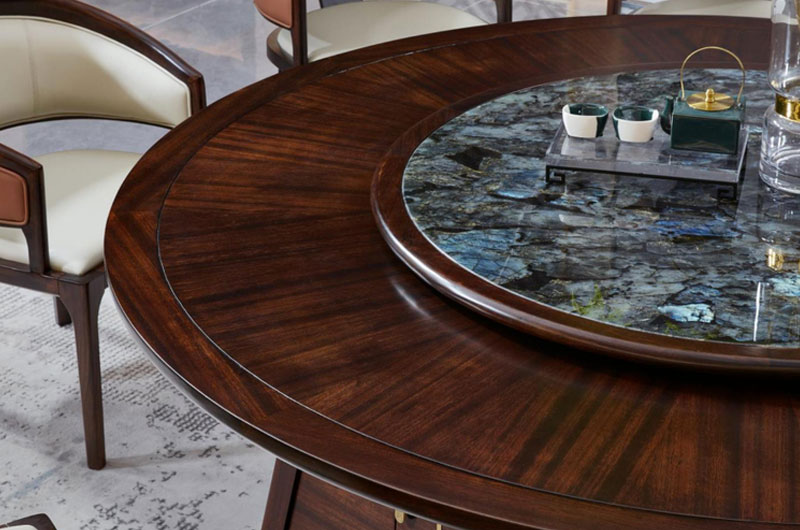
Choosing a dining table is not simply a matter of selecting a style you like. The shape of the table influences seating relationships, circulation, visual balance, conversation, chair placement, and the way the dining area connects with surrounding rooms. Among the available options, the Round dining table has a particularly distinctive spatial character because it removes sharp directional edges and creates a central gathering point.
That does not mean a round table is automatically the right solution for every dining room. Long and narrow spaces may work better with rectangular tables, while square rooms, open-plan dining zones, and areas where circulation occurs around several sides can often benefit from a circular form. The best choice depends on room proportions, expected seating, table diameter, base structure, chair size, and the way people actually use the space.
A round table has no conventional head or sides, which helps explain why circular seating naturally creates a more equal relationship between people around the tabletop. In residential dining spaces, this geometric characteristic can also influence visual balance and the way conversations take place around the table.
This guide looks beyond appearance and explains how to evaluate a Round dining table from the perspective of layout, proportions, construction, seating comfort, materials, base design, customization, and long-term use.
Why a Round Dining Table Changes the Way a Dining Space Feels
The most obvious difference between a round and rectangular table is geometry, but the effect goes much further than shape.
A rectangular table creates a clear direction through the room. Its long edges emphasize length, while the two ends create natural visual endpoints. This works particularly well in elongated dining areas where the furniture can follow the proportions of the architecture.
A Round dining table behaves differently. Its shape has no dominant direction, so attention is drawn toward the center rather than along an axis. In a square or nearly square dining area, this can produce a more balanced composition because the furniture does not strongly favor one wall or direction.
Circular furniture can also soften a room containing many straight architectural lines. Walls, doors, windows, cabinets, flooring patterns, and ceiling details are commonly based on rectangles. Introducing a circular tabletop creates contrast without requiring a complicated decorative form.
However, the effectiveness of a round table depends heavily on scale. A small round table placed in a very large dining area may appear disconnected, while an oversized table can create awkward circulation around the perimeter.
The aim is not simply to choose round instead of rectangular. It is to select a shape whose geometry works with the geometry of the room.
Round Dining Table vs Rectangular Dining Table
Neither shape is universally better. Each solves different spatial and functional problems.
| Design Factor | Round Dining Table | Rectangular Dining Table |
|---|---|---|
| Visual direction | Centralized | Linear |
| Best room shape | Square or balanced open areas | Long or rectangular rooms |
| Conversation | Naturally centered | More directional at longer lengths |
| Corners | None | Four corners |
| Circulation | Can flow smoothly around perimeter | Depends strongly on length and end clearance |
| Seating flexibility | Good for moderate groups | Easier to extend for larger groups |
| Base options | Pedestal or multiple-leg structures | Four legs, trestle, pedestal, frame base |
| Visual effect | Soft and balanced | Structured and architectural |
| Large-space suitability | Requires careful diameter planning | Naturally suits long spaces |
| Placement | Often works well centrally | Can follow room or wall direction |
A Round dining table is often effective when you want a dining area to feel more centered and conversational. Because chairs follow the circular edge, users naturally face inward rather than being distributed along a long horizontal line.
Rectangular tables become more practical when the dining room itself has a strong linear proportion or when seating needs to extend significantly along one direction.
If you are comparing the two options for a particular interior, the existing DYHwood discussion of long wood dining table design provides a useful contrast with the round-table approach. DYHwood currently presents both long dining concepts and multiple round solid-wood table designs on its site.
The decision should therefore begin with room geometry rather than a preference for one shape in isolation.
Measure the Room Before Choosing the Table Diameter
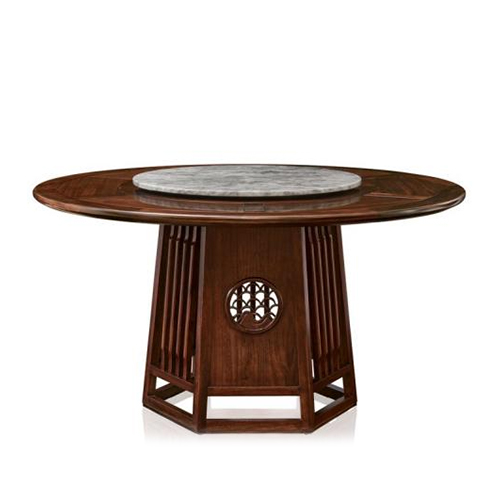
Diameter is one of the most important decisions when selecting a Round dining table.
People often focus on how many chairs can physically be placed around the edge. That approach can lead to a table that technically fits the seating but does not work comfortably within the room.
The usable dining area includes more than the tabletop. Chairs need space to move backward, users need room to sit and stand, and people should still be able to walk around the table when some chairs are occupied.
Begin by measuring the actual usable dining zone. Exclude space required by doors, cabinets, circulation routes, architectural projections, or other furniture.
Then place the proposed table diameter at the center of that area and imagine a second, larger circle around it. This outer zone represents chair movement and circulation.
This method is particularly useful for a round table because the clearance requirement continues around the entire perimeter rather than being concentrated mainly along two long sides and two ends.
Another consideration is visual scale. Even when two different diameters both fit physically, one may suit the architecture better.
In a compact dining area, too large a diameter can make the table appear to occupy the entire room. In a spacious open-plan interior, too small a table may look like an isolated object floating in the middle of the space.
The right diameter therefore balances three questions: How many people need to sit comfortably? How much circulation should remain? Does the table look appropriately scaled to the room?
Think About Seating as a Relationship, Not a Number
A common question is how many chairs fit around a Round dining table. The answer depends on more than diameter.
Chair width, armrests, frame shape, table base design, and the amount of personal space expected between seats all affect the result.
Two dining chairs may have the same seat width but very different overall dimensions. A chair with broad arms or a curved external frame occupies more perimeter space than a slim armless design.
This is why table and chair selection should happen together.
Instead of asking only, “How many chairs fit around this table?” ask whether each chair can be used comfortably after all seats are occupied.
At a crowded table, chairs may technically fit around the edge while users struggle to pull them out or sit naturally. The result feels compromised even though the seating count appears correct on paper.
A Round dining table is especially sensitive to this relationship because the available edge space follows a curve. As more chairs are added, each seat occupies an arc rather than a straight section.
Chair orientation also changes slightly around the table. A suitable base should allow users in different positions to place their legs naturally without repeatedly contacting structural supports.
For this reason, seating capacity should be treated as part of the complete table-and-chair system rather than a fixed number determined by tabletop diameter alone.
The Table Base Can Matter as Much as the Top
The tabletop receives most of the visual attention, but the base often determines whether a Round dining table is comfortable in daily use.
A circular top can be supported by a central pedestal, several legs, a sculptural base, or a more complex frame. Each approach changes legroom, stability, chair positioning, and visual weight.
A central pedestal is attractive because it moves structural support away from much of the outer edge. This can make chair placement more flexible, particularly when users are seated at different positions around the table.
The challenge is that the central structure must still support the tabletop effectively. As table diameter increases, base design becomes more important because the tabletop extends farther from the center.
Multiple legs distribute support differently. They can create a traditional or architectural appearance but need to be positioned carefully so they do not interfere with chairs.
Sculptural bases treat structure as a visible part of the furniture design. This can create a stronger focal point, although the base should still be evaluated from a seated position rather than only from across the room.
The round solid wood dining table currently shown by DYHwood uses a central flower-shaped pedestal concept and is presented in several diameter options, illustrating how base form and tabletop scale can be developed together.
When evaluating a table base, sit where the chairs will actually be placed. A visually impressive support structure should not force users to position their feet awkwardly.
Material Choice Shapes the Character of a Round Dining Table
Shape determines the basic geometry, but material determines much of the atmosphere.
Solid wood gives a Round dining table a warm and substantial character. The curved perimeter also allows the grain and edge profile to be viewed from many directions, making material selection especially visible.
A large rectangular table tends to have clear front, side, and end views. A circular table does not. Every position around it becomes part of the primary viewing experience.
This means grain arrangement deserves attention.
A solid wood top may use joined boards arranged to create visual continuity, while other designs may intentionally emphasize radial, segmented, or contrasting grain. There is no single correct pattern, but the grain should appear deliberate rather than accidental.
Stone can create a more architectural surface, while combining wood and stone allows designers to balance natural warmth with a cooler visual texture. Glass can reduce apparent visual weight, particularly when paired with an expressive base.
The edge profile also changes how the table feels. A sharply defined edge creates a more formal and precise character, while a softened or rounded edge makes the circular geometry feel more tactile.
Material should therefore be evaluated as part of the table form rather than simply selected as a finish.
How Round Dining Tables Affect Conversation and Social Use
One reason round tables remain appealing is the relationship they create between seated users.
Because seats are distributed around a center point, there is no single long axis dividing the group. People can generally orient toward the center rather than primarily toward the person opposite or beside them.
This can be useful in dining rooms where the table is intended as a shared gathering space rather than only as a surface for meals.
However, table diameter still matters.
As a Round dining table becomes very large, the distance across the center increases. At some point, the same geometry that works well for a moderate group can make reaching central dishes or interacting across the table less convenient.
This is why increasing diameter is not always the best response to increased seating requirements.
For larger groups, a rectangular, oval, or extendable table may sometimes provide a more efficient solution. The table shape should respond to the expected number of users rather than forcing every seating requirement into the same circular format.
For everyday residential use, think about the normal group size first and occasional larger gatherings second. A table designed entirely around rare maximum occupancy may feel oversized during most daily meals.
Good furniture planning should prioritize the way the space is used most often.
How to Style a Round Dining Table Without Making the Space Busy
A Round dining table already provides a strong geometric feature, so styling does not need to be complicated.
The first decision is whether the table should become the primary visual anchor of the dining area. If the base is sculptural or the tabletop has expressive natural grain, additional decorative elements can remain restrained.
Lighting is especially important because circular tables work naturally with centrally positioned pendants or chandeliers. A lighting fixture that relates to the table shape can reinforce the central composition without needing to copy it exactly.
A round light above a round table creates strong geometric continuity. A more linear or sculptural light can create contrast.
The surrounding chairs do not need to reproduce the circular form literally. Curved chair backs may reinforce softness, while straighter chairs can provide useful contrast.
Rugs can also help define the dining zone in open-plan interiors. If a rug is used, it should relate to the complete seating footprint rather than only the table. Chairs should not feel as though they move immediately off the defined area whenever they are pulled backward.
Decorative objects should be scaled to the table. A single central arrangement often works more naturally on a circular top than several unrelated objects distributed around the surface.
The objective is to let the table geometry organize the dining area rather than covering it with additional visual information.
Round Dining Tables in Open-Plan Interiors
Open-plan interiors present both opportunities and challenges for round furniture.
Without walls clearly defining the dining room, furniture shape becomes part of the spatial organization. A Round dining table can create a visual center between a kitchen, living area, and circulation zone without establishing a strong directional barrier.
This can be particularly useful where people need to move around several sides of the dining area.
A rectangular table often reinforces the direction of a kitchen island, wall, or corridor. A round table can intentionally break that alignment and give the dining zone its own identity.
The key is to avoid placing the table in a circulation crossroads.
Because the round form encourages movement around the entire perimeter, it may appear to fit neatly into an open area while still interfering with routes between adjoining spaces.
Observe where people naturally walk before finalizing the table position.
Another useful approach is to align the table with a ceiling feature, pendant light, rug, or architectural opening rather than with a wall. This strengthens the sense that the dining area is a deliberate zone within a larger room.
When a Round Dining Table Is Not the Best Choice
Round tables have clear advantages, but good furniture advice also requires recognizing when another shape works better.
A very narrow dining room usually favors a rectangular table because the furniture can follow the length of the room while leaving circulation along the sides.
A space that regularly accommodates a large number of users may also benefit from a longer table. Increasing the diameter of a round table indefinitely eventually creates practical problems with reach, visual scale, and room clearance.
Rectangular tables can also work better when one edge needs to relate closely to a wall, banquette, built-in storage system, or strongly linear architectural feature.
Another situation involves flexible seating. Long tables can sometimes accommodate additional chairs at the ends more naturally than a circular table whose entire perimeter is already divided among seats.
This does not make rectangular furniture superior. It simply demonstrates why the decision should be based on the room.
A Round dining table is strongest when its central geometry helps solve the space. It becomes less effective when the room has to be heavily rearranged simply to accommodate the circular form.
Custom Round Dining Table Design
Customization becomes useful when standard diameters, materials, or base configurations do not fit the intended dining space.
The first customization variable should usually be overall size. Diameter should respond to room dimensions, expected seating, and circulation.
The next decision is the base.
If the project requires flexible chair positioning, a central support may be worth considering. If the visual direction calls for a more traditional structure, multiple legs or a framed base may be more appropriate.
Top thickness should also change in proportion to diameter. Simply enlarging a small-table design without reconsidering the visual and structural relationship between the top and base can produce awkward results.
Material combinations can also be customized. Wood, stone, metal, or other surfaces can change the character of the table significantly, but they should be considered with the base and room rather than specified independently.
Edge treatment is another relatively small detail with a large effect. Rounded edges feel softer and emphasize the circular form, while thinner or sharper profiles create a more architectural appearance.
The purpose of customization should be to improve the relationship between furniture and space. A custom Round dining table is most valuable when it solves proportion, seating, material coordination, or functional requirements that standard options cannot address.
How to Evaluate Round Dining Table Quality
Quality assessment should begin with structure rather than finish.
First, examine how the tabletop is supported. The base should feel proportionate to the diameter and remain stable when normal pressure is applied near different parts of the edge.
A round tabletop extends in every direction, so support needs to work consistently around the complete surface rather than along one dominant axis.
Next, examine joints and connections. Where the base meets the top and where multiple structural components meet each other, connections should appear controlled and properly aligned.
For solid wood furniture, look at grain arrangement and surface preparation. Large areas should feel smooth and intentional, while the circular edge should have a consistent profile around the full perimeter.
The underside also matters. Even if hidden surfaces are not finished to the same decorative level, they can reveal how the base, top, and reinforcing components are assembled.
Finally, test the table with chairs.
Sit in several positions. Check legroom and foot placement. Make sure one seating location is not significantly more restricted than another because of the base structure.
Furniture quality should be evaluated through use as well as visual inspection.
Common Round Dining Table Selection Mistakes
One mistake is choosing diameter only from seating capacity. This ignores chair movement, room circulation, and visual scale.
Another is selecting chairs after the table has already been finalized. Chair width and armrest design can significantly change the number of comfortable seating positions.
A third problem is focusing on the tabletop while ignoring the base. A beautiful circular top cannot compensate for support that interferes with users.
Many interiors also use a table that is too small because the owner is concerned about circulation. While preserving space is important, an undersized table can make a large dining zone feel disconnected. The better solution is to balance table size with a clear circulation plan.
The opposite problem occurs when the table becomes the entire room. A large Round dining table needs sufficient visual breathing space around it.
Another common mistake is matching every circular element. A round table, round rug, round pendant, curved chairs, circular artwork, and repeated curved accessories can make the design feel overly literal.
Repetition should be controlled.
Let the table establish the strongest circle, then decide which surrounding elements should reinforce it and which should provide contrast.
How to Maintain a Round Dining Table
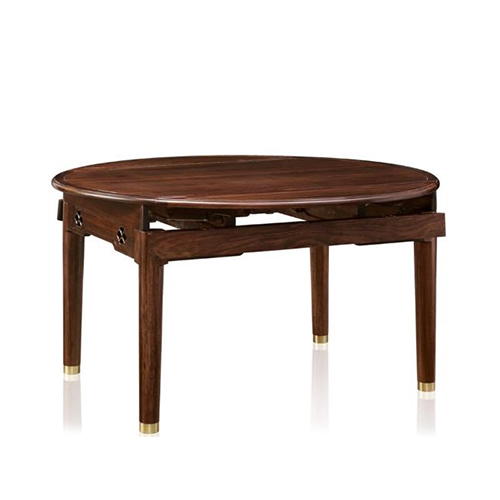
Maintenance depends primarily on material and finish rather than shape, but the circular form creates a few practical considerations.
Because there is no protected “back” edge, every part of the table perimeter may receive regular contact. Rotate decorative arrangements occasionally and inspect the complete edge rather than focusing on one side.
For wood surfaces, remove spills promptly and use cleaning methods compatible with the original finish. Avoid assuming that oils or polishes are appropriate for every wooden table.
Protect the top from concentrated heat, prolonged moisture, abrasive objects, and sharp impacts. Dining tables are high-use surfaces, so small protective habits can help preserve the finish.
If the table includes moving or extendable components, inspect them periodically and keep mechanisms operating according to the manufacturer’s intended method.
The base should also be checked occasionally, especially on larger tables. Any unusual movement should be addressed before it begins to affect joints or surrounding components.
Consistent, simple care is generally more useful than frequent aggressive treatment.
Conclusion
A Round dining table can transform the way a dining space looks and functions, but its success depends on much more than the circular tabletop.
Room shape should come first. Square, balanced, and open-plan dining areas often respond naturally to circular geometry, while long, narrow rooms may favor rectangular furniture.
Next, consider diameter and circulation together. A table is not truly the right size if it fits the room but leaves too little space for chairs and movement.
Seating should then be evaluated as part of the table design. Chair width, armrests, table height, and base configuration all influence the number of people who can sit comfortably.
The base deserves as much attention as the top. It affects stability, legroom, visual weight, and chair placement, especially as table diameter increases.
Finally, evaluate materials, construction, grain arrangement, edge treatment, and real-world usability rather than choosing from appearance alone.
The most successful Round dining table is not necessarily the largest or most decorative one. It is the table whose diameter, base, materials, seating, and position work naturally with the room.
When these relationships are resolved together, a round table can become more than a dining surface. It can establish a clear center for the dining space while maintaining comfortable movement, balanced proportions, and a strong connection between the people seated around it.
FAQ
Is a Round dining table better for a small dining room?
A Round dining table can work well in compact dining areas because it has no projecting corners and can support smooth movement around the perimeter. However, diameter still needs to leave enough space for chairs and circulation. Room shape and chair size should be considered before deciding.
How do I choose the right size Round dining table?
Start with the usable room dimensions, then consider the space needed for chairs to move and people to walk around the table. After establishing the maximum practical diameter, compare seating needs and chair width. The best size balances capacity, circulation, and visual proportion.
Is a pedestal base better for a Round dining table?
A pedestal base can provide flexible chair positioning because fewer supports are located near the outer edge. However, it still needs sufficient structural stability for the tabletop diameter. A well-designed multi-leg base can also work effectively, so base quality matters more than one specific style.
Should I choose a Round dining table or a rectangular table?
Choose according to the room rather than style alone. Round tables often suit square or centrally organized dining spaces, while rectangular tables usually work naturally in longer rooms. Consider seating capacity, circulation, architectural direction, and how frequently the table will be used.
Can a Round dining table be customized?
Yes. Diameter, tabletop material, thickness, edge profile, base structure, wood finish, and other details can be adapted to a particular interior. Customization is most useful when it improves seating, circulation, room proportion, or material coordination rather than changing appearance alone.