
Table of Contents
Introduction

Good wood furniture design is not defined by how much wood is used or how decorative a piece appears. It is the result of several decisions working together: material selection, proportion, structural logic, ergonomics, grain direction, joinery, surface treatment, and the relationship between the furniture and the surrounding space.
This is why two pieces made from similar timber can create completely different experiences. One may feel balanced, comfortable, and visually calm, while another may appear heavy, awkward, or difficult to use. The difference often lies in design rather than material alone.
Wood remains one of the most versatile materials used in furniture because it can serve both structural and decorative purposes. A leg, frame, tabletop, cabinet panel, or curved chair back can simultaneously carry loads and contribute to the visual identity of the piece.
For homeowners, interior designers, project planners, and anyone evaluating custom furniture, understanding the fundamentals of wood furniture design makes it easier to distinguish meaningful design decisions from purely decorative features.
This guide covers:
- How material affects furniture design
- Why proportion often matters more than size
- How wood grain becomes part of the visual composition
- The relationship between structure and appearance
- How ergonomics influence furniture dimensions
- Design priorities for different rooms
- How wood works with stone, fabric, leather, glass, and metal
- The difference between visual quality and construction quality
- When custom furniture design is useful
- How to evaluate a furniture design before production or selection
What Makes Good Wood Furniture Design?
Successful wood furniture design connects appearance with function.
A dining chair should look balanced, but it also needs to support repeated sitting and movement. A dining table may have an impressive silhouette, but its base should provide stability and sufficient legroom. A cabinet needs attractive proportions while still offering practical storage and comfortable access.
This relationship can be summarized through five design questions:
- Is the material appropriate?
- Is the structure logical?
- Are the proportions balanced?
- Is the furniture comfortable to use?
- Does it work within the intended space?
If one of these areas is ignored, the quality of the complete design can suffer.
Design Is More Than Styling
Furniture styling concerns visible characteristics such as curves, colors, decorative details, leg shapes, and surface finishes.
Furniture design goes deeper.
It also considers load distribution, dimensions, joints, manufacturing feasibility, material movement, access, comfort, and spatial relationships.
A visually attractive concept that cannot be manufactured reliably is incomplete. Likewise, an extremely strong structure that feels uncomfortable or visually clumsy is not fully resolved.
Good wood furniture design brings technical and aesthetic decisions together.
Start with the Right Wood and Material Strategy
Material should be selected early in the design process rather than treated as a surface choice added at the end.
Different furniture components have different requirements. Chair legs, broad cabinet panels, table surfaces, bed rails, drawer interiors, and decorative details do not necessarily need identical construction.
Solid Wood
Solid wood is particularly useful when the design includes:
- Visible structural frames
- Shaped edges
- Curved components
- Exposed legs
- Sculpted transitions
- Visible joinery
- Natural grain surfaces
One advantage of solid wood is that the designer can use the material itself as part of the visual language.
A curved edge, tapered leg, rounded armrest, or exposed joint can reveal the depth of the material rather than simply presenting a decorative surface.
Veneered Panels
Veneer can also play an important role in wood furniture design.
Large cabinet doors, wide decorative panels, and other broad surfaces may benefit from construction that allows more controlled grain arrangement and dimensional consistency.
The important principle is not that one construction method is universally superior. It is that each material should be used where its characteristics make sense.
Mixed Materials
Contemporary wood furniture frequently combines timber with:
- Natural or engineered stone
- Upholstery fabric
- Leather
- Metal
- Glass
- Woven materials
- Ceramic surfaces
Mixed-material design works best when every material has a clear purpose.
If wood provides warmth and structural identity, stone might provide surface contrast. Upholstery can improve comfort, while metal may create a lighter visual detail.
Using more materials does not automatically make furniture more sophisticated. Controlled material relationships usually produce a clearer design.
Proportion Is the Foundation of Wood Furniture Design
Proportion determines whether furniture feels visually balanced before you even begin evaluating details.
A beautiful timber surface cannot compensate for awkward proportions.
Thickness and Visual Weight
One common misconception is that thicker wood automatically creates a stronger or more valuable appearance.
In reality, excessive thickness can make furniture feel unnecessarily heavy.
A tabletop should relate visually to:
- Its length
- Its width
- The size of its base
- The surrounding chairs
- The room scale
The same principle applies to cabinet sides, chair legs, armrests, and bed frames.
The objective is not to make everything thin. It is to use enough visual and structural mass for the design to feel intentional.
Height Relationships
Furniture rarely exists alone.
A coffee table relates to the sofa beside it. A dining chair relates to the dining table. A bedside cabinet relates to the mattress. A desk chair relates to the working surface.
This means individual dimensions should be considered as relationships rather than isolated numbers.
Visual Center of Gravity
Furniture also has a visual center of gravity.
A large cabinet sitting directly on the floor appears heavier than a similarly sized cabinet raised on slim legs.
A dining table with a central pedestal creates a different visual balance from one supported by four corner legs.
Understanding visual weight allows designers to use substantial wood without making a room feel crowded.
Let Wood Grain Become Part of the Design
Wood grain is not simply a natural pattern left over after manufacturing. In thoughtful wood furniture design, it becomes one of the primary visual elements.
Grain Direction
Grain direction can reinforce the geometry of a piece.
On a long table, grain running along the length helps emphasize the horizontal form. On tall cabinet doors, vertical grain can increase the sense of height.
Designers can also use deliberate changes in grain direction to create contrast between frames, panels, drawers, and doors.
The key is intention.
Random grain placement can make an otherwise clean furniture design look visually fragmented.
Grain Continuity
Furniture with multiple adjacent panels can use grain continuity to produce a calmer surface.
This does not mean every board should appear identical. Natural variation is part of wood’s character.
Instead, neighboring pieces should be considered together during material selection.
Natural Variation
Real wood contains changes in:
- Tone
- Grain density
- Grain direction
- Figure
- Texture
These variations can add depth to furniture when they are controlled.
Trying to eliminate every difference can make natural material appear unnecessarily artificial, while ignoring variation completely can produce a disconnected visual surface.
Good material selection sits between these extremes.
Structure Should Support the Design, Not Fight It
Some furniture looks simple because its structure has been carefully resolved.
Minimal design can actually demand more structural discipline because fewer decorative elements are available to hide connections and support systems.
Think About Load Paths
A useful furniture design question is:
Where does the weight go?
For a dining table, the load moves from the tabletop through its support structure to the floor.
For a chair, forces move through the seat, back, rails, and legs, while the structure also needs to resist movement in several directions.
For a bed, mattress and user loads must be distributed through rails, slats, central supports, and legs.
Understanding these paths helps designers determine where material is truly necessary.
Joint Selection
Wood furniture may use different joining methods depending on the application.
Common approaches include:
- Mortise-and-tenon construction
- Dowel joints
- Frame-and-panel construction
- Reinforced corner connections
- Mechanical furniture connectors
- Specialized structural hardware
There is no single joint that should automatically be used everywhere.
A suitable joint responds to the material dimensions, manufacturing method, direction of force, and intended use.
Structural Simplicity
An efficient structure often creates a cleaner design.
If a table requires a large number of visible braces to remain stable, the support concept may need reconsideration.
Likewise, reducing structural components purely for appearance can create another problem.
The objective is to use enough structure without introducing unnecessary complexity.
Ergonomics Turns Design into Everyday Comfort
Furniture is experienced physically.
You can admire a chair visually, but you eventually need to sit on it. A desk may photograph beautifully, but it still needs enough legroom. A cabinet may have perfect proportions while remaining inconvenient to open.
Ergonomics is therefore an essential part of wood furniture design.
Seating Design
A chair involves several connected variables:
- Seat height
- Seat depth
- Seat angle
- Backrest angle
- Backrest curvature
- Armrest position
- Frame width
- Cushion thickness
Changing one dimension can affect several others.
For example, adding a thicker seat cushion raises the effective seating position unless the wooden frame dimensions are adjusted accordingly.
Table Design
Dining table design involves more than tabletop dimensions.
The support structure affects:
- Legroom
- Chair placement
- Seating flexibility
- Visual weight
- Stability
A round solid wood dining table with a central pedestal demonstrates how the base itself can become a major design feature while also influencing usable space around the table.
This is an important design principle: structural elements do not need to disappear. They can contribute directly to the character of the furniture when form and function are resolved together.
Storage Furniture
Cabinets should be designed around access.
Important questions include:
- Can doors open fully?
- Are commonly used areas within comfortable reach?
- Do drawers extend sufficiently?
- Will hardware interfere with internal storage?
- Is the furniture stable when large doors or drawers are open?
Storage capacity alone does not define good design. Accessible storage is more valuable than unused internal volume.
Wood Furniture Design for Different Rooms
Furniture requirements change from room to room.
The same design principles apply, but the priorities shift according to how people use each space.
| Space | Key Furniture | Main Design Priority | Important Details |
|---|---|---|---|
| Living room | Sofa, coffee table, side table, cabinet | Comfort and visual balance | Seating height, circulation, visual weight |
| Dining room | Dining table, chairs, sideboard | Ergonomics and stability | Legroom, chair clearance, base structure |
| Bedroom | Bed, bedside tables, wardrobe | Calm proportions and support | Bed structure, storage access, height |
| Study | Desk, chair, bookshelf | Working comfort and organization | Legroom, storage, cable management |
| Tea or relaxation area | Tables, chairs, cabinets | Atmosphere and scale | Seating relationship, negative space |
| Open-plan area | Coordinated furniture | Visual continuity | Material rhythm, hierarchy, circulation |
Living Room Furniture
Living room furniture should create a hierarchy.
Usually one piece or furniture group carries the strongest visual role. This may be the sofa, central table, or a feature storage cabinet.
Secondary pieces should support the composition.
If every object uses heavy solid wood, bold grain, sculptural legs, and decorative details, the room may lose its visual focus.
Good wood furniture design considers not only the individual product but also how much attention each piece demands.
Dining Room Furniture
The dining area requires particularly careful relationships between products.
The table and chairs need to function as a system.
A well-designed chair may not work with a particular table if:
- Armrests cannot pass beneath the top
- The base limits legroom
- The table apron is too low
- Chair width reduces usable seating
- Seat height creates an uncomfortable relationship
Dining furniture should therefore be evaluated together.
Bedroom Furniture
Bedroom furniture generally benefits from quieter forms.
The bed normally establishes the primary visual mass, so supporting pieces should avoid unnecessary competition.
A broad wooden headboard can provide warmth and material character, while bedside tables and storage furniture use simpler geometry.
Structural design remains important, especially for bed rails, central supports, and connection points.
Study Furniture
Desk design should begin with how the workspace will be used.
Consider:
- Working surface depth
- Equipment placement
- Cable access
- Drawer position
- Leg clearance
- Storage requirements
A visually clean desk that cannot accommodate normal working activities is not a successful design.
Use Negative Space as a Design Material

One of the most overlooked elements in wood furniture design is empty space.
Negative space exists:
- Beneath raised cabinets
- Between table legs
- Inside open chair backs
- Around shelves
- Between furniture pieces
- Around the perimeter of a room
These empty areas influence how heavy or light furniture feels.
Raised Bases
Raising furniture from the floor can reduce perceived mass.
This technique works particularly well for:
- Sideboards
- Cabinets
- Sofas
- Beds
- Bedside tables
Visible floor area gives the furniture more breathing space.
Open Frames
Open chair backs, slim table bases, and recessed cabinet supports allow light and visual information to pass through the piece.
This can make substantial wood furniture work more comfortably in contemporary interiors.
Room-Level Negative Space
Furniture should also have enough space around it.
The existing DYHwood discussion of solid wood furniture and interior balance reflects the same practical principle: strong furniture works better when layout, proportion, and visual breathing space are considered together.
Adding more furniture is not always the best way to make a room feel complete.
Sometimes removing one piece creates a stronger composition.
How to Combine Wood with Other Materials
Modern wood furniture design often becomes more interesting when wood is not the only material.
The challenge is maintaining hierarchy.
Wood and Stone
Stone creates strong textural contrast.
Wood generally feels warm and organic, while stone often appears cooler and more architectural.
This combination can work well for:
- Dining tables
- Coffee tables
- Side tables
- Cabinets
- Console surfaces
The two materials should not compete equally on every surface.
One can act as the primary material while the other creates contrast.
Wood and Upholstery
Fabric and leather can soften wooden structures and improve comfort.
This combination is especially useful for:
- Sofas
- Dining chairs
- Lounge chairs
- Benches
- Beds
The transition between hard and soft materials deserves design attention.
Poorly resolved upholstery edges can weaken an otherwise precise timber frame.
Wood and Metal
Metal can make wood furniture feel visually lighter.
Thin supports, hardware, handles, and small structural details can introduce contrast without overpowering the natural material.
Metal works most effectively when it has a specific functional or visual purpose.
Wood and Glass
Glass preserves visual openness.
It may be useful where the furniture needs surface area without creating additional visual mass.
However, glass thickness, edge treatment, support details, and the relationship with the wooden frame should all be considered during design.
Custom Wood Furniture Design: When Does It Make Sense?
Custom furniture is most valuable when it solves a real problem.
It should not be viewed simply as a way to change color or decoration.
Difficult Room Dimensions
Custom design can help when a room includes:
- Irregular walls
- Restricted circulation
- Unusual ceiling conditions
- Columns
- Built-in architectural features
- Non-standard room proportions
Furniture can then respond to the architecture rather than forcing the architecture to accommodate standard dimensions.
Specific Functional Requirements
Customization is also useful when standard furniture cannot provide the required function.
Examples include:
- Special storage layouts
- Long dining tables
- Integrated desks
- Coordinated whole-room furniture
- Special seating configurations
- Display storage
- Combined storage and media functions
Coordinated Material Direction
For whole-room or whole-home projects, custom furniture can create continuity between spaces.
Continuity does not mean making every product identical.
Instead, furniture might share:
- Similar edge treatment
- Related leg proportions
- Consistent wood tone
- Repeated curves
- Coordinated hardware
- Compatible upholstery
This creates a family relationship between pieces without producing a repetitive matching set.
How to Evaluate a Wood Furniture Design Before Production
A good concept should be tested before manufacturing begins.
Visual renderings are useful, but they should not be the only evaluation method.
Review the Overall Silhouette
Look at the furniture from a distance.
Ask:
- Does it feel balanced?
- Is one component too visually heavy?
- Does the base appear capable of supporting the top?
- Are curves and straight lines working together?
If the overall silhouette is weak, small decorative improvements will not solve the underlying problem.
Review Critical Dimensions
Check dimensions that directly affect use.
For seating, this includes height, depth, width, and backrest relationships.
For tables, review height, top dimensions, base position, and clearance.
For cabinets, examine depth, shelf positions, door movement, and access.
Review Connections
Look closely at connection areas.
Examples include:
- Leg-to-frame joints
- Tabletop-to-base connections
- Chair-back connections
- Bed rail joints
- Cabinet corner construction
These areas often determine whether the design can be manufactured cleanly.
Review Manufacturing Feasibility
A highly complex detail may look elegant in a rendering but introduce unnecessary manufacturing difficulty.
Design should consider:
- Material availability
- Machining
- Assembly
- Sanding
- Finishing
- Upholstery
- Hardware installation
- Transportation and installation
Simplifying a detail does not necessarily reduce quality. Often, simplification produces a cleaner and more reliable result.
How to Judge the Craftsmanship Behind the Design
Design and craftsmanship are closely connected.
Even a strong design can lose its character when execution is inconsistent.
Joint Precision
Connections should appear intentional.
Visible gaps, uneven transitions, or misaligned components can interrupt the geometry of a piece.
Surface Preparation
Finishing quality begins with preparation.
Look for:
- Smooth large surfaces
- Consistent curves
- Clean corners
- Controlled edge profiles
- Minimal sanding marks
- Even transitions between components
Surface coatings cannot fully correct poor preparation.
Repeated Details
Repetition makes inconsistencies easy to notice.
Drawer gaps, cabinet doors, chair spindles, repeated slats, and decorative lines should maintain a consistent rhythm.
Hidden Areas
Inspect the furniture from below or inside where possible.
Good manufacturing discipline usually continues beyond the most visible surfaces.
Hidden areas do not need decorative finishing, but they should remain structurally clean and logically assembled.
Wood Furniture Design vs Furniture Styling
These concepts are related but should not be confused.
| Area | Furniture Design | Furniture Styling |
| Primary focus | Function, structure, proportion | Appearance and visual direction |
| Material selection | Structural and aesthetic | Mainly aesthetic |
| Dimensions | Essential | Usually predetermined |
| Ergonomics | Central consideration | Limited influence |
| Joinery | Part of design | Usually not addressed |
| Manufacturing | Considered early | Often secondary |
| Colors and finishes | Integrated with design | Major focus |
| Decorative objects | Limited role | Important role |
| Room coordination | Functional and spatial | Primarily visual |
Furniture styling can improve presentation.
Furniture design determines whether the product works.
The strongest interiors combine both.
Common Wood Furniture Design Mistakes
Making Every Component Too Thick
Large timber sections can communicate strength, but when every component is oversized the furniture loses hierarchy.
Thickness should change according to structural and visual requirements.
Designing from the Front View Only
Furniture is three-dimensional.
A chair that looks elegant from the front may appear awkward from the side. A table base may work in elevation but interfere with seating when viewed from above.
Evaluate every important angle.
Adding Decorative Details Too Early
Decoration should not be used to solve weak proportions.
First resolve:
- Overall dimensions
- Structure
- Ergonomics
- Material
- Major transitions
Decorative elements can then support an already successful design.
Ignoring Real Use
Furniture should be designed around behavior.
Ask how people will:
- Sit
- Stand
- Reach
- Walk around it
- Open doors
- Pull drawers
- Store objects
- Clean surfaces
Real use often reveals design problems that renderings do not.
Overmatching a Room
Using the same wood, grain direction, leg design, edge profile, and decoration on every piece can make an interior feel overly coordinated.
A better approach is controlled repetition.
Repeat selected design cues while allowing individual pieces to have their own identity.
Following Short-Term Trends Too Closely
Furniture often remains part of an interior for longer than decorative accessories.
For major pieces, timeless proportion and functional clarity usually provide a stronger foundation than highly specific visual trends.
A Practical Wood Furniture Design Checklist
Before approving or selecting a furniture design, review six areas.
Material
- Is the material appropriate for the function?
- Are solid wood and panel constructions clearly understood?
- Does the grain direction support the design?
- Are mixed materials used intentionally?
Proportion
- Does the furniture suit the room scale?
- Are thicknesses visually balanced?
- Does the design feel stable without looking unnecessarily heavy?
- Does it relate properly to nearby furniture?
Structure
- Is the load path logical?
- Are major joints appropriate?
- Are long spans sufficiently supported?
- Are structural components integrated into the design?
Ergonomics
- Are seating dimensions comfortable?
- Is table clearance sufficient?
- Are storage areas accessible?
- Can users move naturally around the furniture?
Craftsmanship
- Are joints clean?
- Are edges consistent?
- Are repeated gaps controlled?
- Does the surface preparation match the simplicity of the design?
Space
- Is circulation maintained?
- Is there enough negative space?
- Does the furniture create a clear hierarchy?
- Are important architectural features still visible?
A strong wood furniture design should answer most of these questions confidently before decorative details become the main focus.
How to Maintain the Original Design Quality
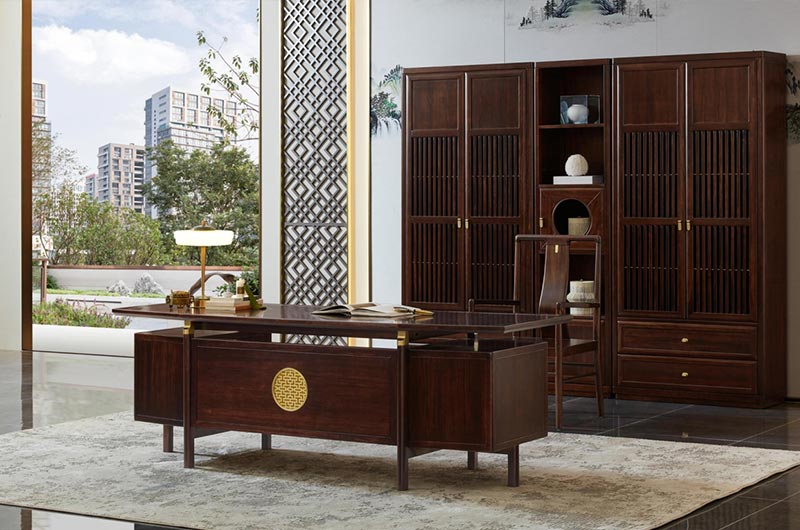
Maintenance affects how furniture continues to look and function.
Keep Surfaces Clean
Use care methods appropriate to the original finish.
Routine dust removal prevents dirt from accumulating around joints, edges, hardware, and textured surfaces.
Protect High-Use Areas
Dining tables, desks, coffee tables, and bedside surfaces experience frequent contact.
Protect them from prolonged moisture, excessive heat, sharp objects, and abrasive materials.
Maintain a Stable Interior Environment
Natural wood responds to environmental conditions.
Avoid extreme changes around solid wood furniture where practical, particularly near strong heat sources or areas with consistently unstable conditions.
Check Functional Components
Moving hardware may require occasional inspection.
Doors, drawers, connectors, and adjustable components should remain properly aligned so small issues do not create additional stress on surrounding parts.
Follow the Original Finish System
Do not assume every wood surface needs oil or wax.
Different finishes require different maintenance. Applying an incompatible product can change sheen, color, or surface behavior.
Conclusion
Successful wood furniture design begins long before the final finish is applied.
It starts with understanding how the furniture will be used, where it will be placed, what material characteristics matter, and how the structure will respond to everyday loads. Proportion, ergonomics, grain direction, joinery, and manufacturing feasibility then shape the final form.
This is why good wood furniture does not need excessive decoration to feel distinctive.
A carefully proportioned dining table can make its structural base part of the design. A chair can achieve character through the relationship between its curved back and timber frame. A cabinet can become visually interesting through grain continuity, controlled gaps, and subtle edge details.
At room level, the same principle applies. Furniture should support the architecture rather than overwhelm it. Negative space, circulation, material contrast, and visual hierarchy all contribute to a more balanced interior.
The most effective wood furniture design therefore connects three levels of thinking: the material, the individual product, and the complete space.
When all three are considered together, furniture becomes more than a functional object. It becomes an integrated part of how an interior looks, feels, and works every day.
FAQ
What is wood furniture design?
Wood furniture design is the process of developing furniture by combining material selection, proportion, structure, ergonomics, joinery, surface treatment, and visual form. Good design considers not only how a piece looks, but also how it functions, feels, and fits into its intended interior.
What makes a good wood furniture design?
A good wood furniture design balances appearance with practical use. The material should suit the structure, dimensions should support comfortable use, joints should respond to expected loads, and proportions should work within the room without making the furniture feel unnecessarily heavy.
Is solid wood always better for furniture design?
No single material is best for every component. Solid wood works especially well for frames, legs, shaped edges, and visible structural parts, while veneered or engineered panels can be useful for broad surfaces. Quality depends on selecting the right construction for each function.
How does wood grain affect furniture design?
Grain influences visual direction, balance, and character. Designers can use horizontal, vertical, continuous, or contrasting grain arrangements to reinforce the furniture’s geometry. Natural variation should be coordinated rather than eliminated so the material still retains its authentic appearance.
When should custom wood furniture design be considered?
Custom design is useful when standard furniture cannot solve room dimensions, storage requirements, seating layouts, material coordination, or specific functional needs. Effective customization should improve space use, ergonomics, proportion, or visual continuity rather than simply change decoration.