
Table of Contents
Introduction
When people think of high-end interior design, materials play a more important role than decoration. Among all furniture materials, solid wood furniture consistently stands out as one of the most reliable and visually powerful choices for creating a premium living environment.
Unlike synthetic or composite materials, solid wood carries natural grain patterns, structural density, and long-term durability that cannot be easily replicated. However, simply using solid wood furniture does not automatically create a high-end look. The result depends on proportion, layout, material pairing, and design discipline.
In professional interior design practice, luxury is not defined by cost alone—it is defined by visual balance, material authenticity, and spatial harmony.
This guide explains how to create a high-end interior look using solid wood furniture with practical, experience-based design principles.
Core Principle: Luxury Comes from Simplicity and Balance
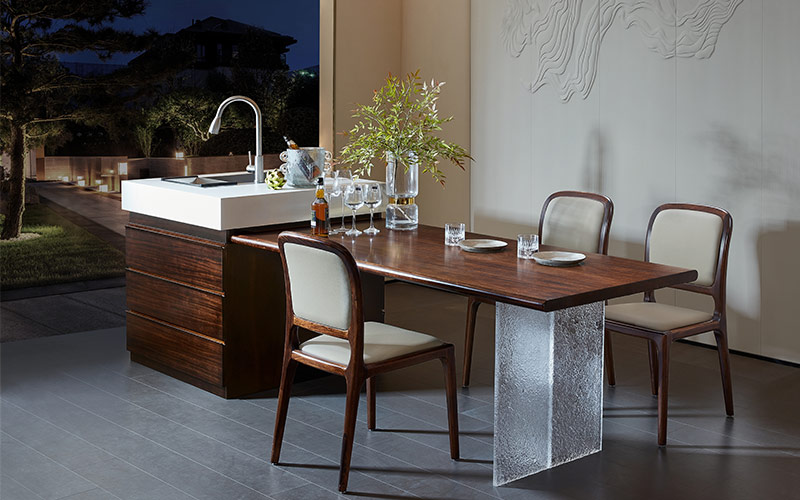
A high-end interior is not about filling a room with expensive pieces. Instead, it is about controlling visual noise and creating intentional space.
The key principle is:
Solid wood furniture should enhance the space, not dominate it.
This means:
- Avoid overcrowding
- Maintain visual breathing space
- Balance material weight
- Keep design consistency
When these elements are aligned, even simple furniture arrangements can feel premium.
Choosing the Right Solid Wood Furniture for a High-End Look
Not all solid wood furniture creates the same visual impact. Selection is the foundation of design success.
1. Prioritize Natural Grain Clarity
High-end interiors rely on material authenticity.
Key indicators:
- Visible natural wood grain
- Minimal artificial surface treatment
- Consistent tone variation
Based on interior material studies referenced in furniture design literature, natural wood textures are associated with higher perceived value and comfort due to their organic irregularity and visual depth.
2. Focus on Proportion Over Size
Bigger furniture does not mean more luxury.
Instead, consider:
- Room scale
- Ceiling height
- Walking flow
- Visual balance
Oversized solid wood furniture can easily make a space feel heavy rather than refined.
3. Choose Timeless Design Over Trend-Based Styles
High-end interiors avoid fast-changing design trends.
Timeless solid wood furniture typically features:
- Clean lines
- Balanced geometry
- Minimal decorative overload
How to Arrange Solid Wood Furniture for a High-End Look
1. Create Clear Visual Hierarchy
Every room should have one dominant visual focus.
This could be:
- Sofa arrangement
- Dining table
- Feature cabinet
- Central coffee table
Without hierarchy, even premium furniture appears disorganized.
2. Maintain Negative Space
Negative space refers to empty areas that allow the room to “breathe.”
Recommended design principle:
At least 30% of visible floor space should remain open or lightly occupied
This is a commonly used guideline in professional interior planning to maintain visual clarity.
3. Balance Material Weight Across the Room
Solid wood has strong visual weight.
To balance it:
- Pair heavy wood with lighter textiles
- Use open-frame furniture where possible
- Avoid clustering all wood pieces in one area
4. Use Symmetry or Controlled Asymmetry
Both symmetry and intentional asymmetry can create a high-end feel.
- Symmetry → formal, structured luxury
- Asymmetry → modern, dynamic elegance
The key is consistency, not randomness.
Solid Wood Furniture Design Strategy Table
| Strategy | Purpose | Visual Effect | Best Use Case |
|---|---|---|---|
| Negative space control | Reduce visual clutter | Cleaner, premium feel | All interiors |
| Proportion balancing | Match furniture to space | Better harmony | Small to large rooms |
| Focal point design | Guide visual attention | Structured layout | Living areas |
| Material pairing | Balance visual weight | Softer atmosphere | Wood-heavy spaces |
| Layout symmetry control | Improve visual order | Elegant composition | Formal spaces |
Real-World Case Study: Transforming a Standard Room into a High-End Space
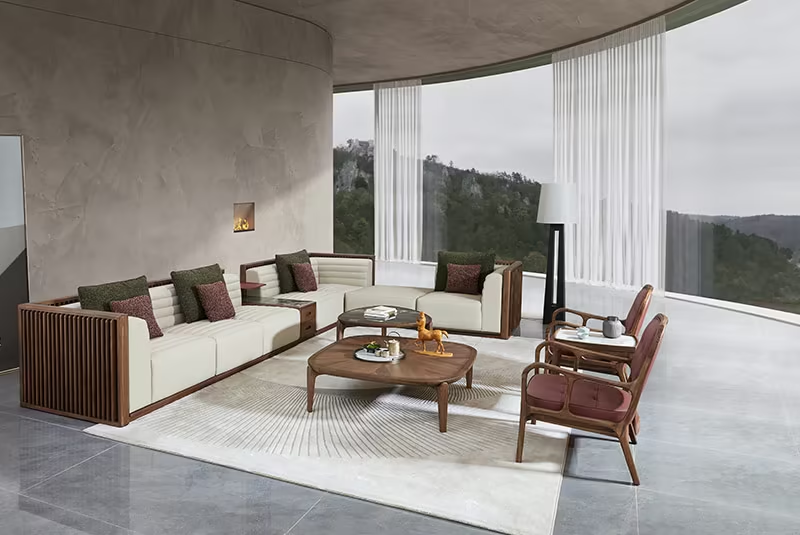
Initial Situation:
A room filled with multiple solid wood furniture pieces including a large table set, storage units, and seating elements.
Problems Identified:
- Over-concentration of wood materials
- Lack of visual hierarchy
- Minimal empty space
- Heavy overall visual impression
Design Adjustments:
- Reduced central furniture density
- Introduced open circulation zones
- Balanced wood with lighter visual elements
- Defined a clear focal point in seating area
Outcome:
- Improved spatial clarity
- More refined visual atmosphere
- Stronger perception of luxury
- Better usability and flow
This demonstrates that high-end design is not about adding more, but about refining placement and proportion.
Common Mistakes That Prevent a High-End Look
1. Overusing Solid Wood in Every Element
Problem:
Creates visual heaviness.
Result:
Space feels dense rather than elegant.
2. Ignoring Room Scale
Problem:
Furniture is not matched to spatial dimensions.
Result:
Poor proportion and imbalance.
3. Filling Every Empty Area
Problem:
No breathing space remains.
Result:
Loss of luxury perception.
4. Mixing Too Many Styles
Problem:
Inconsistent design language.
Result:
Visual confusion instead of harmony.
How Solid Wood Furniture Enhances Luxury Interiors
When properly designed and placed, solid wood furniture provides:
- Natural visual depth
- Long-term durability
- Strong architectural presence
- Timeless aesthetic quality
- High perceived material value
Its strength lies in authenticity and structure rather than decoration.
Professional Framework for Creating High-End Interiors
Interior designers typically follow a structured process:
- Define room function and hierarchy
- Select key solid wood furniture pieces
- Establish focal point and layout flow
- Balance material weight distribution
- Preserve negative space
- Adjust proportions for visual harmony
- Finalize lighting and spatial layering
This ensures both functionality and luxury perception are achieved together.
Conclusion
Creating a high-end look with solid wood furniture is not about adding more pieces—it is about refining how each piece interacts with space.
By controlling proportion, maintaining negative space, and designing with clear visual hierarchy, you can transform any interior into a balanced and elegant environment.
When used thoughtfully, solid wood furniture becomes more than material—it becomes a design language that defines quality, stability, and timeless style.
FAQ
What makes solid wood furniture look high-end?
It depends on proportion, layout balance, material quality, and design simplicity.
Can solid wood furniture work in modern interiors?
Yes, especially when combined with minimal and clean design principles.
How much space should be left in a room with solid wood furniture?
Ideally around 30% open or lightly used space for visual balance.
Does darker wood always look more luxurious?
Not necessarily. Luxury depends more on balance and design than color alone.
How can I avoid a heavy look with solid wood furniture?
Use spacing, lighter material pairing, and avoid overcrowding.
Need Help Designing a High-End Solid Wood Interior?
If you’re unsure how to arrange solid wood furniture for a refined and balanced interior, our team can help you create a tailored design solution that enhances both aesthetics and functionality. Contact us today for a professional consultation and build a space that reflects true quality, balance, and long-term value.