
When you invest in luxury living room furniture, the decision often boils down to a fundamental choice between solid wood and wood veneer. This choice dictates not just the initial aesthetic of your space, but the long-term structural integrity and investment value of your interior. For procurement managers, interior designers, and homeowners seeking high-end project solutions, understanding the engineering behind these materials is essential for making an informed selection.
Table of Contents
Understanding the Core: Solid Wood vs. Wood Veneer

Solid wood furniture consists of consistent timber throughout the entire piece. In the high-end sector, this often means utilizing premium hardwoods like black ebony or walnut-colored ebony. These materials are prized for their density and natural grain patterns that run through the depth of the board.
Wood veneer, by contrast, is a thin layer of decorative hardwood bonded to a core of particleboard or medium-density fiberboard (MDF). While veneer can achieve a high level of surface symmetry, it lacks the structural substance of solid timber. According to industry reports on furniture depreciation, solid wood pieces tend to retain or even increase in value over decades, whereas veneered items often face a shorter functional lifespan due to the risk of delamination or core degradation.
The Art of Mortise and Tenon Joinery in Luxury Living Room Furniture
The true hallmark of luxury living room furniture lies in how it is assembled. Our manufacturing process utilizes the ancient mortise and tenon joinery technique. This method involves a protruding “tenon” on one piece of wood fitting precisely into a “mortise” hole on another.
By eliminating the need for metal nails or screws, the furniture accounts for the natural movement of wood. Metal fasteners can loosen over time as wood expands and contracts with humidity changes, eventually leading to a wobbly or compromised structure. The interlocking nature of mortise and tenon joints ensures that the furniture becomes more stable under pressure, effectively allowing the piece to last for generations without structural failure.
Material Excellence: Black Ebony vs. Walnut-Colored Ebony
Black ebony is internationally recognized as one of the most prestigious and durable timbers available. Its tight grain and high natural oil content provide a built-in resistance to wear and moisture. Walnut-colored ebony offers a warmer, more contemporary aesthetic while maintaining the legendary hardness of the ebony species.
Technical analysis of these timbers shows a high Janka hardness rating, which measures the resistance of a sample of wood to denting and wear. By choosing these materials, you are selecting a surface that can withstand the rigors of both residential life and high-traffic commercial environments without losing its refined luster.
Comparison of Performance and Application
The following table provides a technical comparison to help you determine which material and construction method aligns with your project requirements.
| Technical Feature | Solid Ebony (Mortise & Tenon) | Standard Wood Veneer (Glued/Screwed) |
| Structural Longevity | 50+ Years (Heirloom Quality) | 5-10 Years (Replacement Cycle) |
| Repairability | High (Can be sanded and refinished) | Low (Surface damage is permanent) |
| Joint Stability | Excellent (Self-locking mechanism) | Moderate (Prone to loosening) |
| Chemical Usage | Minimal (Natural oil finishes) | High (Adhesives and resins) |
| Market Value | Increases with age | Depreciates rapidly |
| Environmental Impact | Low (Biodegradable and sustainable) | High (Non-recyclable composite cores) |
Durability Standards for Commercial and Residential Projects
For large-scale projects, durability is a non-negotiable metric. Solid wood construction is particularly advantageous in environments where temperature and humidity are not always perfectly controlled. Because solid Ebony is a “living” material, it breathes. When paired with traditional joinery, the furniture can accommodate slight shifts in dimension without cracking.
Veneered products often struggle in high-traffic settings. If the thin surface layer is scratched or chipped, the unsightly composite core is exposed. With solid luxury living room furniture, a scratch can simply be buffed out or refinished, maintaining the flawless appearance required for premium brand standards.
Bespoke Luxury Living Room Furniture Customization
One of the greatest advantages of working with a source factory is the ability to move beyond off-the-shelf options. Whether you are furnishing a boutique hotel lounge or a private estate, customization allows you to align the furniture with the architectural language of the building.
We provide comprehensive project furniture supply, meaning every dimension and finish can be adjusted to meet specific spatial needs. This level of bespoke service ensures that each piece is not just furniture but a tailored component of the interior design strategy.
OEM and ODM Solutions for Global Furniture Brands
For businesses looking to expand their own collections, our OEM and ODM manufacturing services provide a bridge between design concepts and physical reality. We transform technical drawings into precision-machined prototypes, ensuring that the final mass-produced items maintain the same artisanal quality as a single custom piece.
By utilizing advanced woodworking technology alongside traditional hand-finishing, we offer a scalable production model. This allows global wholesalers to provide high-end, nail-free furniture to their clients with the assurance of structural consistency and aesthetic excellence.
Integrated Full-House Furniture Project Supply
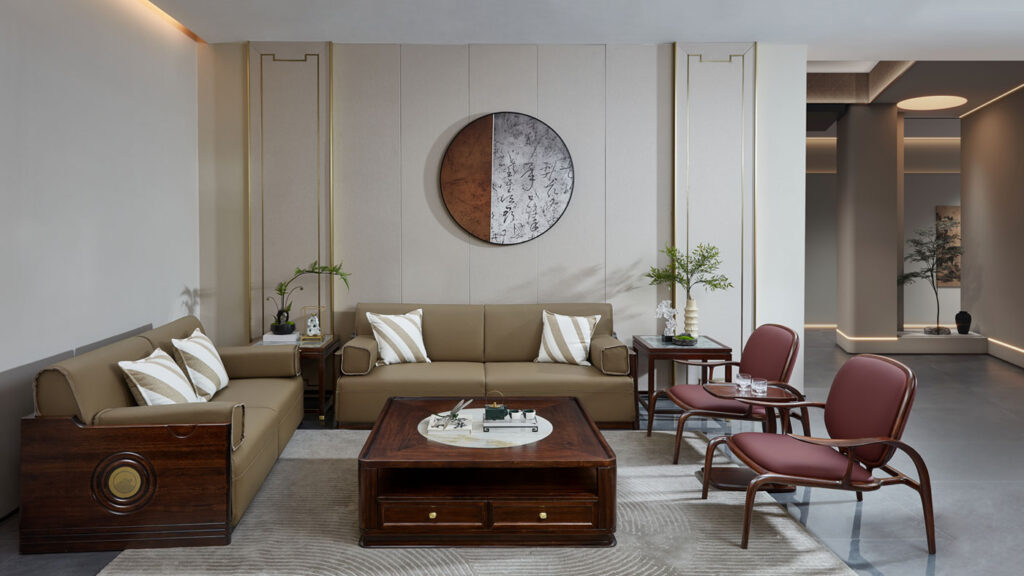
Modern luxury living room furniture rarely stands alone. It is usually part of a cohesive design logic that spans the entire property. Our integrated solutions cover everything from the living area to the bedroom and dining space.
For real estate developers, this full-house approach simplifies the supply chain. Instead of managing multiple vendors, you receive a unified collection of Ebony furniture that shares the same grain characteristics, finish quality, and structural integrity. This synergy is what creates a truly premium atmosphere in any residential or commercial project.
Sustainable Sourcing and Long-term Investment Value
Sustainability in the luxury sector is about longevity. A piece of furniture that lasts 100 years is fundamentally more sustainable than five pieces that last 20 years each. Research into sustainable forestry indicates that using durable hardwoods for long-life products sequester carbon for much longer periods than fast-disposable furniture.
Investing in solid Ebony furniture with mortise and tenon joints is a commitment to quality and environmental responsibility. It represents a move away from the “throwaway” culture of modern manufacturing and a return to the wisdom of traditional craftsmanship.
FAQ
What defines the structural superiority of your luxury living room furniture?
Our furniture utilizes the ancient mortise and tenon joinery technique instead of metal nails. This traditional wood-to-wood interlocking system allows the pieces to naturally adjust to temperature changes, ensuring the structure remains stable and loose-free for decades.
Why is solid Ebony preferred over wood veneer for high-end projects?
Solid ebony and walnut-colored ebony offer unparalleled density and repairability. Unlike veneer, which can delaminate or reveal a composite core when scratched, solid timber can be refinished multiple times, maintaining its investment value in high-traffic commercial environments.
Do you provide customization for large-scale residential or hotel projects?
Yes. We offer comprehensive OEM/ODM and bespoke manufacturing services. We can customize dimensions, finishes, and configurations to align with specific architectural plans, providing a seamless full-house furniture solution for developers and designers.
How does the “nail-free” construction benefit international shipping?
Furniture built with mortise and tenon joints is inherently more rigid and resistant to the vibrations of long-distance transit. By eliminating metal fasteners that can strip or rust, we ensure that the structural integrity of each luxury piece remains intact from the factory to the final destination.
What are the primary aesthetic differences between Black Ebony and Walnut-colored Ebony?
Black ebony features a deep, dark, and sophisticated grain that epitomizes “quiet luxury,” while walnut-colored ebony offers a warmer, more contemporary tone. Both materials share the same high Janka hardness rating, ensuring they meet the durability standards required for luxury living room furniture.
Need Help Selecting the Perfect Luxury Living Room Furniture?
If you’re unsure which solid ebony or walnut-colored timber is best suited for your high-end residential or commercial project, our experts are here to help. Contact us today for a personalized consultation to discuss your bespoke requirements, OEM/ODM needs, or full-house furniture solutions. Ensure your interior space reflects the timeless wisdom of mortise and tenon craftsmanship combined with modern sophistication. Don’t settle for temporary veneer—get in touch now to invest in heirloom-quality pieces that will protect your investment and elevate your brand!