
Table of Contents
When you imagine your ideal dining room, what comes to mind? A warm gathering space where family meals, celebrations, and everyday moments unfold. Now imagine that space elevated by a centerpiece—the ebony dining table.
Not just a place to eat, an ebony dining table is a statement of elegance, durability, and timeless craftsmanship. But how do you choose the right one? How do you ensure it fits your space, your lifestyle, and your long‑term goals? This article walks you through everything you need to confidently select, design, and care for an ebony dining table—backed by examples, practical data, and expert recommendations.
Understanding the Allure of an Ebony Dining Table
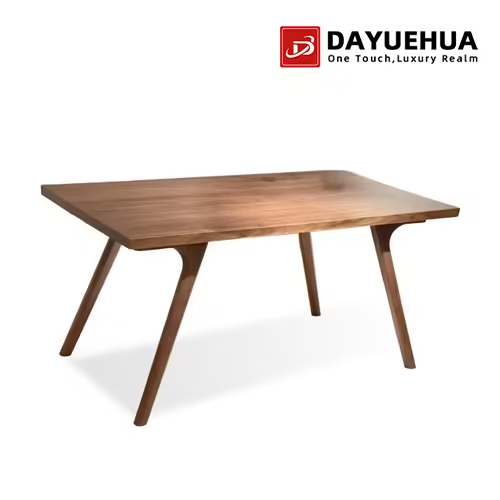
What Makes Ebony So Special?
Ebony refers to a family of hardwoods with deeply dense fibers and dark tones ranging from rich espresso to true black. Its natural beauty and strength make it a premium choice for dining furniture.
Here’s a comparison to help you see where ebony stands:
| Feature | Ebony | Oak | Walnut |
|---|---|---|---|
| Janka Hardness | ~3,220 lbf | ~1,290 lbf | ~1,010 lbf |
| Density | Very high | High | Medium |
| Surface Polish | Very smooth | Smooth | Smooth |
| Durability | Extremely high | High | High |
| Visual Impact | Dramatic, bold | Classic | Warm, rich |
Ebony’s natural characteristics make it ideal for a ebony dining table that is not only hard‑wearing but also a conversation starter. Its density resists scratches and dents better than most hardwoods, making it perfect for large family meals and frequent use.
Practical Considerations Before You Buy
Before choosing an ebony dining table, you need to think through some key questions so your purchase fits your space and lifestyle:
Space and Dimensions—Size Matters
Your table should complement the room—not overwhelm it. As a general guideline:
| Room Width | Ideal Table Length |
|---|---|
| 8 feet | 4–5 feet |
| 10 feet | 5–6 feet |
| 12 feet | 6–8 feet |
Seating Capacity and Shape
Common dining table shapes and capacities:
| Shape | Seats | Best For |
|---|---|---|
| Rectangle | 6–10 | Traditional dining rooms |
| Oval | 6–8 | Softer aesthetic, easy flow |
| Round | 4–6 | Small rooms or intimate spaces |
Remember, leave at least 36 inches around the table for chairs and movement.
Finishing and Maintenance
Ebony requires careful finishing to show its natural beauty. A well‑finished surface:
- Resists spills and stains
- Enhances color depth
- Smooths the wood’s natural grain
Designing Your Dining Space Around an Ebony Table
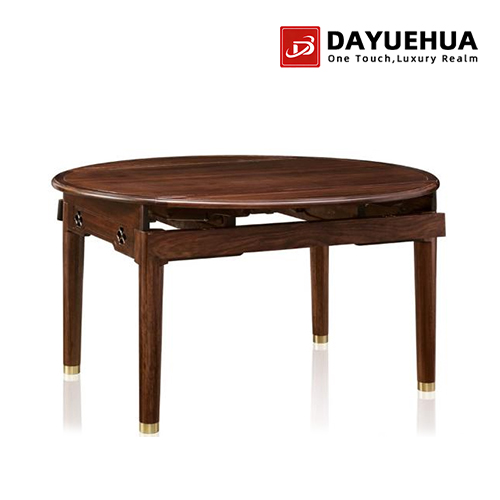
Your ebony dining table is the centerpiece—so everything else should complement it.
Seating That Enhances Comfort and Style
While an ebony table demands attention, balance comes through thoughtful seating. Consider:
- Upholstered chairs with neutral tones
- Natural linen fabrics
- Chairs with subtle wood inlays
Case Example:
A homeowner chose an ebony table with walnut‑toned ebony chairs featuring woven seat pads. The result was a blend of dramatic table presence and comfortable seating that kept the mood welcoming and not overwhelming.
Lighting That Sets the Tone
Lighting transforms visual perception. Warm light (2700K–3000K) enhances ebony’s rich tones, making the dining room feel cozy and inviting.
Textiles and Accessories
Table runners, placemats, and centerpieces should:
- Contrast with the table’s dark surface
- Help protect the tabletop from heat and spills
- Add color or texture without cluttering
Custom vs Ready‑Made: Why Custom Ebony Tables Win
You might find ready‑made tables that look attractive, but for an investment piece like an ebony dining table, custom offers significant advantages:
1. Perfect Fit for Your Space
Custom tables can be sized precisely to fit your room, making movement and traffic flow comfortable.
2. Tailored Functionality
You control:
- Extension mechanisms
- Hidden leaves
- Integrated storage for dining essentials
3. Material Precision
Not all ebony is alike. Custom sourcing ensures:
- Straight‑grain patterns
- Uniform color depth
- Minimal knots or defects
Choosing the right boards means your table will resist warping and aging issues over decades.
Case Studies: Real Homes, Real Tables
Case Study 1—Family Gathering Table
Scenario: A family of six wanted stronger dining furniture that could handle frequent dinners and occasional holiday crowds.
Solution: A 96‑inch ebony table with a smooth high polish and a removable extension leaf. Chairs were upholstered in washable fabric.
Outcome: The table became a central anchor for family events—easy to clean, durable, and visually cohesive with the home’s style.
Lessons learned:
- High‑polish surfaces make cleaning easier
- Extension leaves add versatility
- Seating comfort is critical
Case Study 2—Open‑Plan Living and Dining
Scenario: A homeowner had an open living and dining area that needed cohesion without heaviness.
Solution: An ebony table paired with minimalist walnut chairs, complemented by a low‑profile sideboard.
Outcome: The design brought balance to the space—the table asserted presence while other pieces stayed visually light.
Insights:
- Contrast furniture styles for balance
- Keep surrounding décor minimal so the table stands out
Selecting Materials: Ebony and Alternatives
While ebony itself is premium, you have options depending on budget and aesthetic goals:
| Material | Appearance | Durability | Price Level |
|---|---|---|---|
| Ebony | Deep, luxurious dark | Extremely high | High |
| Walnut-toned ebony | Warm and rich | Very high | Medium‑high |
| Hard maple with dark finish | Classic but lighter | High | Medium |
If you want detailed comparisons on wood species, review the wood properties at the Wood Database species chart.
Table Shapes, Sizes, and Configuration
| Shape | Seating | Space Impacts |
|---|---|---|
| Rectangle | 6–10 | Traditional, efficient |
| Round | 4–8 | Promotes conversation |
| Oval | 6–10 | Softer, elegant flow |
Choosing shapes depends on room layout and how people interact during meals. A round table often works best in smaller rooms or families with frequent face‑to‑face interaction.
Maintenance: Keeping Your Table Beautiful for Decades
Routine Care
- Wipe spills immediately
- Use soft cloths for cleaning
- Place coasters and heat pads to prevent rings
Long‑Term Preservation
To maintain wood balance:
- Keep humidity between 40 and 60%.
- Avoid direct sunlight
- Re‑oil surfaces yearly if unfinished
Making the Right Choice: Questions to Ask Yourself
- How often will you use the table?
Frequent use favors tougher finishes and thoughtful maintenance plans. - Do you host large gatherings?
Consider extension leaves and larger seating plans. - What’s your space size?
Allow adequate circulation around the table. - Is the table part of a set?
Coordinate chairs, sideboards, and lighting for seamless style.
Conclusion
An ebony dining table is more than furniture—it’s a centerpiece that defines gathering spaces, reflects timeless craftsmanship, and stands the test of daily life. By understanding space planning, material qualities, design strategies, and care requirements, you can select and live with an ebony table that enriches your home for years to come.
From intimate dinners to festive celebrations, your ebony dining table becomes the heart of your home—functional, elegant, and uniquely yours.
FAQ
Is an ebony dining table too dark for small rooms?
Ebony’s deep color can make a room feel cozier, not smaller, when paired with light walls and strategic lighting.
How do I protect an ebony table from spills and heat?
Use coasters, placemats, and heat pads. A high‑quality finish also adds protection.
Can I refinish my table if it gets scratched?
Yes—solid wood tables can be refinished by professionals to restore beauty.
Do ebony dining tables need special humidity control?
Ideally, maintain 40–60% humidity to prevent cracking or warping.
Is custom better than mass-produced?
For long‑term durability and style fit, custom offers greater value and personalization.